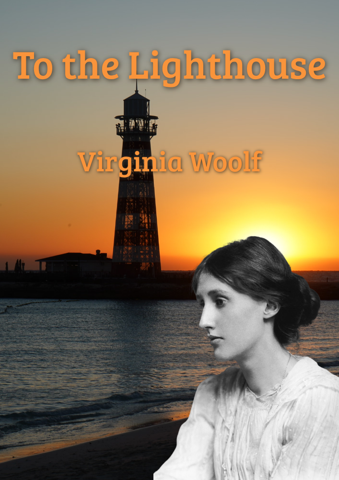
Story:
At the Ramsays' summer house in the Hebrides, young James longs to sail to the lighthouse, while his father insists the weather will prevent it. Around that small disappointment gather a marriage, a household of guests, and painter Lily Briscoe's struggle to finish what she sees. Then time passes through the empty house, carrying war and loss with it, before the survivors return to confront an old promise.
Reading Highlights:
The three parts change the scale of time with breathtaking control: an evening fills with thought, a decade crosses the house in a few pages, and a final morning brings art and family memory toward completion. Woolf makes tiny gestures carry the weight of love, resentment, absence, and creation. It is a demanding but unusually intimate modernist novel.
Directed by Colin Gregg for British television; United Kingdom; starring Rosemary Harris, Michael Gough, Suzanne Bertish, and Kenneth Branagh. It remains the principal direct screen adaptation of Woolf's novel.
How it differs from the book:
The television film compresses the book's radical three-part treatment of consciousness and elapsed time into a compact drama, giving dialogue and visible action to material often carried by interior narration.
How to choose a reader's edition:
A complete edition must retain The Window, Time Passes, and The Lighthouse. Notes on Woolf's autobiographical connections and the First World War can deepen the reading, but plot-heavy introductions are best read afterward. Translators face the special task of preserving shifting viewpoints and sentence rhythm across passages where the speaker can change almost invisibly.
Virginia Woolf published To the Lighthouse in 1927, two years after Mrs Dalloway, at the height of her formal confidence. The Ramsay family and their summer house draw on Woolf's memories of her own parents and childhood holidays, but autobiography is transformed through the novel's daring treatment of time. Lily Briscoe's painting also makes artistic creation part of the book's answer to loss.
Virginia Woolf’s To the Lighthouse unfolds in three structurally distinct sections, "The Window," "Time Passes," and "The Lighthouse", examining the passage of time, the complexity of human relationships, and the search for permanence through art. Section I: The Window The novel opens at the Ramsay family’s summer home in the Hebrides. The narrative centers on the stark contrast between Mrs. Ramsay and her husband, Mr. Ramsay. Mrs. Ramsay embodies emotional intuition, maternal warmth, and a nurturing instinct that seeks to create harmony among her family and guests. In contrast, Mr. Ramsay is defined by intellectual rigidity, rational pedantry, and an insatiable need for emotional reassurance. When their six-year-old son, James, desperately wants to visit the nearby lighthouse, Mrs. Ramsay promises they will go if the weather permits. Mr. Ramsay bluntly insists that the weather will not be fair, igniting a deep, lasting resentment in James toward his father’s emotional insensitivity. Among the guests staying at the house are Charles Tansley, a socially insecure scholar who dismisses women's intellectual and artistic abilities; Mr. Carmichael, an elderly poet; and Lily Briscoe, an unmarried painter struggling against societal expectations and her own self-doubt. Mrs. Ramsay acts as a unifying presence, managing the anxieties of her guests and hosting a pivotal dinner party where individual isolations momentarily yield to a shared sense of community and permanence. Lily begins a portrait of Mrs. Ramsay and James, though she struggles to translate her subjective vision onto the canvas. The section closes with an intimate, tacit moment of connection between Mr. and Mrs. Ramsay. Section II: Time Passes The middle section spans ten years, compressing a decade into an impressionistic chronicle of decay and loss. As the Ramsay house sits abandoned, nature slowly reclaims the property. Interspersed within descriptions of physical degradation are detached, bracketed announcements of human tragedy: Mrs. Ramsay dies suddenly in her sleep; her daughter Prue dies from complications in childbirth; and her son Andrew is killed in the First World War. Human order makes a brief, laborious return when the caretakers, Mrs. McNab and Mrs. Bast, clean and restore the house. The section concludes as the surviving family members and former guests return to the summer home, setting the stage for a confrontation with the ghosts of the past. Section III: The Lighthouse A decade after their initial attempt, the remaining Ramsays and their guests gather at the home. Lily Briscoe returns to her unfinished canvas, determined to capture the memory of Mrs. Ramsay and complete her vision. However, her creative process is initially stifled by Mr. Ramsay’s lingering, overwhelming demands for sympathy. A brief, mundane exchange regarding his boots breaks the tension, granting Lily the solitude she requires. Mr. Ramsay, accompanied by James and Cam, embarks on the long-delayed boat expedition to the lighthouse. During the journey, James and Cam harbor bitterness toward their father's authoritarian presence. Yet, as the wind picks up and they near their destination, their hostility softens into an appreciation of his vulnerability and intellectual isolation. Upon reaching the lighthouse rock, Mr. Ramsay turns to James and praises his seamanship with a simple "Well done!", granting James the validation he had sought since childhood. Simultaneously, watching the boat from the shore, Lily undergoes a cathartic processing of grief and memory. She reconciles her complex feelings about Mrs. Ramsay’s idealized domestic vision with her own commitment to artistic independence. Sensing that Mr. Ramsay has reached the shore, Lily turns to her canvas. With a final, decisive stroke down the center, she achieves artistic resolution, bringing her painting, and her inner search for meaning, to completion.
So with the lamps all put out, the moon sunk, and a thin rain drumming on the roof a downpouring of immense darkness began.To the Lighthouse Part 2: Time Passes. It establishes a haunting, lyrical atmosphere that shifts the novel's focus from individual human drama to the impersonal forces of nature and mortality.
The great revelation had never come. The great revelation perhaps never did come. Instead there were little daily miracles, illuminations, matches struck unexpectedly in the dark; here was one.To the Lighthouse Part 3: The Lighthouse. It offers the central philosophy of the novel, suggesting that meaning in life is not found in grand epiphanies but in fleeting, created moments of stability and connection.
With a sudden intensity, as if she saw it clear for a second, she drew a line there, in the centre. It was done; it was finished. Yes, she thought, laying down her brush in extreme fatigue, I have had my vision.To the Lighthouse Part 3: The Lighthouse. It serves as the triumphant climax of the novel, celebrating the power of artistic vision to forge order and permanence out of temporal chaos.
The novel presents a distinct stylistic challenge because it abandons traditional, plot-driven narration in favor of stream-of-consciousness prose. Readers must adapt to a fluid narrative voice that shifts fluidly between the inner thoughts of multiple characters, often within the space of a single sentence. Rather than focusing on external actions, the story emphasizes emotional shifts, memories, and personal impressions. The middle section also shifts perspective away from human characters entirely to focus on the passage of time inside an empty house. While this style requires careful concentration, the lyrical rhythm of the sentences creates a deeply immersive and intimate experience once a reader adjusts to its unique momentum.
Virginia Woolf's 1927 novel stands as a landmark of modern literature because it radically reshaped how narrative time and psychological reality could be represented in fiction. By shifting the focus of storytelling from external events to the complex landscape of human thought, Woolf captured the fragmented nature of modern life. Her innovative three-part structure contrasts a single detailed evening with the broad sweep of an entire decade, proving that small domestic moments can carry immense emotional weight. The work remains a masterclass in how form, metaphor, and interior monologue can be combined to explore grief, memory, and artistic creation.
The tension between the Ramsay parents embodies the fundamental opposition between cold rationality and intuitive empathy. Mr. Ramsay's insistence on factual truth, demonstrated by his refusal to pretend the weather will be suitable for a boat trip, reflects a world governed by rigid logic. Conversely, Mrs. Ramsay's desire to protect her son's happiness emphasizes the necessity of emotional comfort and human connection. This dynamic illustrates how differing worldviews shape family relationships and personal perspectives throughout the story.
Lily Briscoe serves as the artistic center of the story and a stand-in for the creative struggle itself. As an unmarried woman trying to paint in a society that dismisses female intellect, she rejects traditional domesticity in pursuit of personal independence. Her ongoing attempt to complete her painting mirrors the overall narrative effort to give form, order, and meaning to the chaotic passage of time.
The lighthouse functions as a multi-layered symbol whose meaning shifts depending on who looks toward it. For young James, it represents an unreachable goal and the boundary between hope and harsh reality. For Mr. Ramsay, it stands as a distant, uncompromising fact. Woolf uses the light guiding boats through darkness to represent the search for truth, stability, and connection amid the unpredictable currents of life and time.
Everything the novel has built across ten years of absence, silence, and longing converges during a final morning on the water and the shore. The resolution of a childhood grievance, the true weight of a father's long-delayed praise, and the exact visual balance that finally completes a long-abandoned canvas are precisely the emotional payoffs waiting to be experienced in the narrative. How the journey across the bay transforms the travelers, and what final line resolves the painting, are discoveries best met directly within the story's final pages.
Miva: the next reading experience beyond audiobooks
Listen like an audiobook, then ask anything, anytime.
Start Miva's narrationMiva does not just narrate. It keeps explaining based on what you ask.