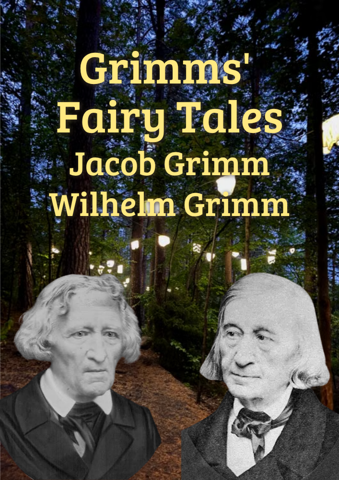
Background:
Jacob and Wilhelm Grimm began collecting, editing, and repeatedly revising German-language tales in the early nineteenth century, producing Kinder- und Hausmärchen. These are not untouched transcripts of a single folk tradition: language, action, and moral emphasis changed across editions. The present book is an English selection rather than the complete German collection.
Story Summary:
Characters driven by poverty, expulsion, promises, or prohibitions leave the familiar world and meet speaking animals, enchanted objects, dangerous forests, and uncertain helpers. Swift tests of wit, generosity, greed, or cruelty lead to immediate and often severe consequences.
Literary Form:
Threefold repetition, formulaic openings and endings, recurring character types, and oral pacing make the tales memorable and adaptable. Modern children's editions often soften violence, religion, or class conflict, so a familiar title does not guarantee the same story or wording.
Directors: Henry Levin and George Pal
Production country: United States
Principal cast: Laurence Harvey, Karlheinz Böhm, Claire Bloom
Reason for inclusion: The film joins a fictionalized life of the brothers to dramatized tales and won the 1963 Academy Award for Costume Design.
Difference from the book: It does not adapt the collection as a whole, but uses a biographical frame to connect freely rewritten fairy-tale episodes.
Main Editions:
The German collection changed substantially between the 1812 first edition and the 1857 final edition. English readers also encounter distinct traditions associated with translators such as Edgar Taylor and Margaret Hunt. Check the number of tales, source edition, named translator, and whether the book is an abridged children's retelling.
Reading Recommendation:
For general reading, choose a complete, clearly credited selection with a contents list. For textual or folklore study, use an edition that supplies KHM numbers, source notes, and variant readings.
Cultural Significance:
The Grimms' editorial project brought a vast body of tales into publishing, education, illustration, and film, while helping establish comparative folklore study. Returning to a named edition and translator reveals how continuously these supposedly familiar tales have been reshaped.
Miva: the next reading experience beyond audiobooks
Listen like an audiobook, then ask anything, anytime.
Start Miva's narrationMiva does not just narrate. It keeps explaining based on what you ask.