The Founding Text of Decadent Literature
The Novel That Inspired Oscar Wilde's The Picture of Dorian Gray
The Bible of the Symbolist Aesthetic
A Story With Almost No Plot—Only One Obsessive Mind
You will finish it wondering if beauty and cruelty were ever separate things.
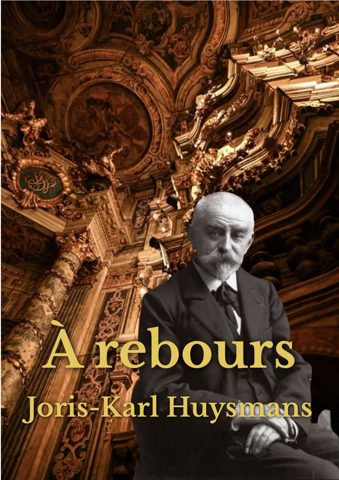
Published in 1884, Against Nature (French: À rebours) remains one of the most audacious experiments in French literature. Joris-Karl Huysmans built the entire narrative around a single character—Duke Jean des Esseintes, the last scion of an aristocratic line, an eccentric and ailing aesthete who retreats from bourgeois society into a world built entirely from his own taste.
What Huysmans constructed was not merely a novel. It was an anatomy of refinement: the hunger to escape reality through art, sensation, and control, until desire itself becomes strategy and cruelty hides behind exquisite surfaces. The themes of decadent salons, provincial ambition, and glittering city life reach their most concentrated form here. And the book does not simply depict a world of taste. It exposes the machinery beneath it.
"A style handbook, a breviary of decadence*."* —Arthur Symons, critic
Decades later, the reverberations have not stopped. Oscar Wilde drew directly on the novel while writing The Picture of Dorian Gray (1890), and later generations of Symbolist writers traced their aesthetic lineage back to Huysmans' original break from Naturalism. Since its publication, Against Nature has remained a touchstone for every subsequent depiction of decadent obsession, cited and echoed across literature that followed.
The Against Nature is a short novel you will finish in an afternoon. You will question its glittering world for much longer than that.
Miva: the next reading experience beyond audiobooks
Listen like an audiobook, then ask anything, anytime.
Start Miva's narrationMiva does not just narrate. It keeps explaining based on what you ask.