Truth disappears among the voices—the classic source of modern unreliable narration.
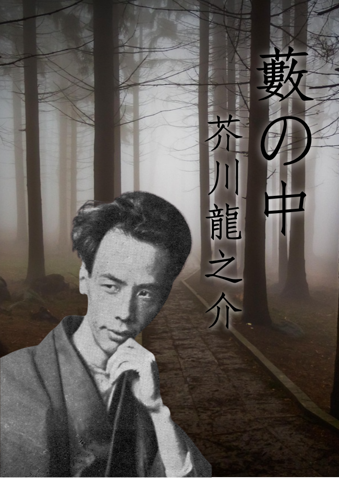
"In a Grove" pieces together a murder case through multiple testimonies, yet each version contradicts the others. The closer the reader gets to the event, the more they discover that the truth may be obscured by desire, shame, pride, and narrative strategy. Akira Kurosawa's film Rashomon is an adaptation that combines "In a Grove" and "Rashomon," turning the "Rashomon Effect" into a global concept for describing multiple subjective truths.
Ryūnosuke Akutagawa was born in Tokyo in 1892. He began writing while studying English Literature at Tokyo Imperial University, gaining prominence when "The Nose" was praised by Natsume Sōseki. He excelled at rewriting classical materials, such as Konjaku Monogatarishū, presenting the anxieties of modern people through precise style and cold psychological analysis. In 1927, suffering from long-term nervous exhaustion and insomnia, he committed suicide at the age of 35.
This work embodies Akutagawa's greatest skill: the modernization of classical materials, where an ancient case is rewritten as a modern problem of psychology and narrative epistemology. In modern terms, it can be compared to the manipulation of testimony and subjective truth by authors like Keigo Higashino and Kanae Minato, and shares a common origin with multi-perspective crime narratives common in film and television today.
Miva: the next reading experience beyond audiobooks
Listen like an audiobook, then ask anything, anytime.
Start Miva's narrationMiva does not just narrate. It keeps explaining based on what you ask.