The Book That Invented Nonsense as a Serious Art Form
The Novel That Gave Science a Hypothesis • The Poem That Gave English a Dozen New Words
A Lost Chapter Rediscovered After a Century • Still Impossible to Fully Explain
Alice steps through the looking-glass. On the other side, everything is reversed, the chess pieces are alive, and to get anywhere at all, you must first walk in the opposite direction.
Published in 1871, Through the Looking-Glass is the sequel to Alice's Adventures in Wonderland—and in many ways its darker, stranger twin. Where the first book tumbles Alice down a rabbit hole into summer chaos, this one walks her deliberately through a mirror into a world of winter logic: a giant chessboard where Alice begins as a pawn and must reach the eighth rank to become a Queen, and where the rules of cause and effect have been quietly, systematically inverted.
Lewis Carroll was a mathematician at Oxford, and it shows. The Looking-Glass world does not merely ignore logic—it applies it in reverse, with merciless consistency. To reach the Red Queen, Alice must walk away from her. To stay in one place, she must run at full speed. Jam is available yesterday and tomorrow, but never today. The White Queen believes as many as six impossible things before breakfast, and she does so as a matter of discipline.
What Carroll constructed beneath the whimsy was a precise philosophical argument: about the arbitrariness of language, the instability of identity, and the peculiar violence of growing up.
"It's a poor sort of memory that only works backwards."
—The White Queen, Through the Looking-Glass
The novel's linguistic legacy is staggering for a children's book. "Jabberwocky"—the nonsense poem Alice finds in the Looking-Glass house—introduced galumphing, chortle, and frabjous into the English language, and gave linguists and philosophers a century of material on how meaning operates independently of definition. Humpty Dumpty's theory of portmanteau words—two meanings packed into one—became a standard term in linguistics. "Un-birthday" entered the lexicon. "Six impossible things before breakfast" became shorthand for a particular kind of willful optimism.
A chapter featuring a wasp in a yellow wig was cut from the original proofs because illustrator John Tenniel declared it beyond the appliances of art. The missing text was not rediscovered until 1977—a century later—when it surfaced among Carroll's papers and was published for the first time.
"Curiouser and curiouser."
—Alice
The book's influence has migrated far beyond literature. In evolutionary biology, the Red Queen Hypothesis—the principle that a species must constantly evolve simply to maintain its fitness relative to the systems it co-evolves with—takes its name directly from the Red Queen's explanation to Alice that here, you must run as fast as you can just to stay in place. Jorge Luis Borges drew on Carroll's mirrors and dream logic throughout his work. Douglas Adams absorbed the novel's particular brand of philosophical nonsense into the DNA of The Hitchhiker's Guide to the Galaxy. The Royal Shakespeare Company has staged it. The BBC has adapted it repeatedly.
The book is more melancholy than its predecessor—shadowed by winter, by the passage of time, by the sense that childhood is ending and cannot be recovered. The White Knight, who escorts Alice to the final brook with kind, bumbling ineffectiveness, is widely read as Carroll's portrait of himself: an inventor of beautiful, useless things, watching the child he wrote for grow beyond his reach.
A mathematician wrote a children's book about chess and mirrors. Scientists are still finding theorems inside it.
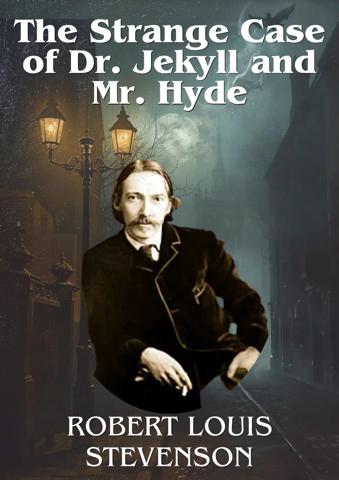
Mr. Utterson, a reserved and austere lawyer, maintained a quiet life in Victorian London, taking regular Sunday walks with his distant relative, Mr. Richard Enfield. On one such walk, they passed a sinister, neglected door
“If he be Mr. Hyde,” he had thought, “I shall be Mr. Seek.”The Strange Case of Dr. Jekyll and Mr. Hyde Chapter 2: Search for Mr. Hyde. This wordplay reveals Utterson's persistent, dutiful nature and underscores the central theme of investigation into human mystery.
And then all of a sudden he broke out in a great flame of anger, stamping with his foot, brandishing the cane, and carrying on (as the maid described it) like a madman.The Strange Case of Dr. Jekyll and Mr. Hyde Chapter 4: The Carew Murder Case. This moment vividly illustrates Hyde's terrifying volatility and total lack of moral constraint or rational impulse control.
And next moment, with ape-like fury, he was trampling his victim under foot and hailing down a storm of blows, under which the bones were audibly shattered and the body jumped upon the roadway.The Strange Case of Dr. Jekyll and Mr. Hyde Chapter 4: The Carew Murder Case. The shocking imagery highlights the primal, savage nature of unbridled evil lurking beneath Victorian civilized society.
Readers approaching this novella today generally find it accessible and fast-paced, though its nineteenth-century Victorian prose requires a slight initial adjustment. Robert Louis Stevenson wrote the original draft of 40,000 words in a brief burst of intense creativity, resulting in a narrative that moves forward with dramatic urgency. While the sentence structure is more formal than modern thrillers, the language is clear, evocative, and surprisingly direct. The story is constructed as a mystery seen through the eyes of Mr. Utterson, a practical lawyer, which grounds the eerie events in tangible, logical observations. The short length of the novella makes it an engaging read that can easily be completed in a few sittings, offering a rich historical feel without becoming overly dense.
Stevenson's novella achieved immediate sensation status upon its release in 1886, selling tens of thousands of copies within months, and it has remained a powerhouse of world literature ever since. Its enduring classic status stems from its groundbreaking exploration of the human mind and the subconscious before modern psychology had fully developed its vocabulary. By creating a literal monster out of a respectable doctor's internal dark impulses, Stevenson captured a fundamental truth about human nature and social hypocrisy. The phrase "Jekyll and Hyde" entered the global lexicon as the definitive shorthand for dual personalities and hidden moral lives. Furthermore, its masterly blend of gothic horror, detective mystery, and psychological drama set a benchmark that continues to influence literature, film, and popular culture worldwide.
Beyond the locked cabinet door lies the ultimate convergence of human ambition and moral terror. The story's conclusion does not merely offer a simple resolution to a missing person's case; it delivers a raw, unvarnished confession written in the hand of a man who dared to divide his own soul. Behind those sealed pages wait the precise details of how an innocent scientific inquiry transformed into an involuntary, irreversible nightmare, revealing the exact boundary where human willpower loses control to the dark side of human nature. To witness the true nature of Edward Hyde and experience the unforgettable impact of Robert Louis Stevenson's timeless masterpiece, read these closing pages for yourself.
The story had its beginnings in a terrifying nightmare dreamed by Stevenson while he was living in Bournemouth in 1885. After being awakened by his wife Fanny, Stevenson claimed he had visualized a man transforming into a monster through a concoction of white powder. He famously wrote the initial draft in just three days. After a critique from Fanny, who argued that the narrative should serve as a profound moral allegory rather than a cheap shocker, Stevenson burned his original manuscript and completely rewrote the entire tale from a new perspective in another three days.
The book resonated powerfully with Victorian readers because it directly addressed the era's deep anxieties regarding social respectability, moral suppression, and double lives. In late nineteenth-century Britain, gentlemanly reputation was paramount, forcing many individuals to conceal their personal vices behind strict public decorum. Stevenson challenged the Victorian tendency to categorize people as purely good or purely evil by presenting a respected physician who harbored monstrous desires. The book's immediate commercial success proved that readers recognized its sharp critique of societal hypocrisy and the psychological strain of maintaining a pristine public persona.
The original novella is a remarkably concise work, running around 130 pages depending on the published edition and font formatting. Stevenson initially drafted approximately 40,000 words during his intense creative writing sessions in 1885. Because of its brevity and tightly woven plot, it functions as a compact psychological thriller rather than a lengthy Victorian novel. Readers can easily read the entire masterpiece in a single sitting while experiencing the full depth of its horror, mystery, and philosophical questions regarding the dual nature of humanity.
Miva: the next reading experience beyond audiobooks
Listen like an audiobook, then ask anything, anytime.
Start Miva's narrationMiva does not just narrate. It keeps explaining based on what you ask.