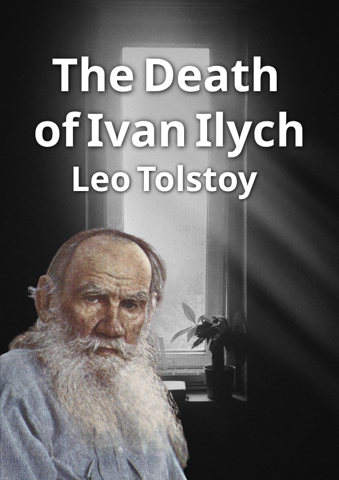
"The Death of Ivan Ilych" depicts a judge on his deathbed who gradually realizes that his seemingly respectable life may have never been truly lived. Tolstoy writes about death with calmness, ordinariness, and cruelty; the most terrifying thing is not death itself, but the protagonist's discovery that his entire life was spent conforming to social expectations, professional advancement, and middle-class etiquette.
Leo Tolstoy, born into the Russian nobility and author of "War and Peace" and "Anna Karenina," experienced a profound religious and moral crisis in his later years, turning toward simplicity, non-violence, and the pursuit of spiritual redemption. "Ivan Ilych" is one of the core works of Tolstoy's later years: it contracts grand epics into a single sickroom, asking how one faces a life of falsehood.
Modern readers might pair it with Julian Barnes's "The Sense of an Ending," Kazuo Ishiguro's "The Remains of the Day," or Atul Gawande's reflections on end-of-life medical care. It is short, yet like a scalpel, it cuts through the hollowness of a "successful life."
Tolstoy’s brilliance lies in making Ivan Ilych’s life appear almost devoid of major sins: studying, working, marrying, getting promoted, decorating a house, and maintaining appearances—these are all socially recognized "normal" paths. However, when illness forces him to re-examine this path, he discovers he has always lived for the eyes of others and institutional expectations. Death is not a sudden punishment, but a beam of cold light that exposes those choices labeled as "success" as hollow gestures.
Placed within an "existential anxiety" reading list, this novella is the most direct and quietest. Kafka writes of the inability to defend oneself within a system, Dostoevsky writes of humans torn between faith and sin, while Tolstoy writes of a person finally unable to lie to themselves before death. It has strong connections to modern end-of-life writing, workplace burnout, and achievement anxiety: one can succeed perfectly according to a social script, only to find at the last moment that it was not one's own life. Therefore, this book is not just a book about death, but a book about life; it asks not how to die, but how to avoid living honestly for the first time only when death arrives.
Miva: the next reading experience beyond audiobooks
Listen like an audiobook, then ask anything, anytime.
Start Miva's narrationMiva does not just narrate. It keeps explaining based on what you ask.