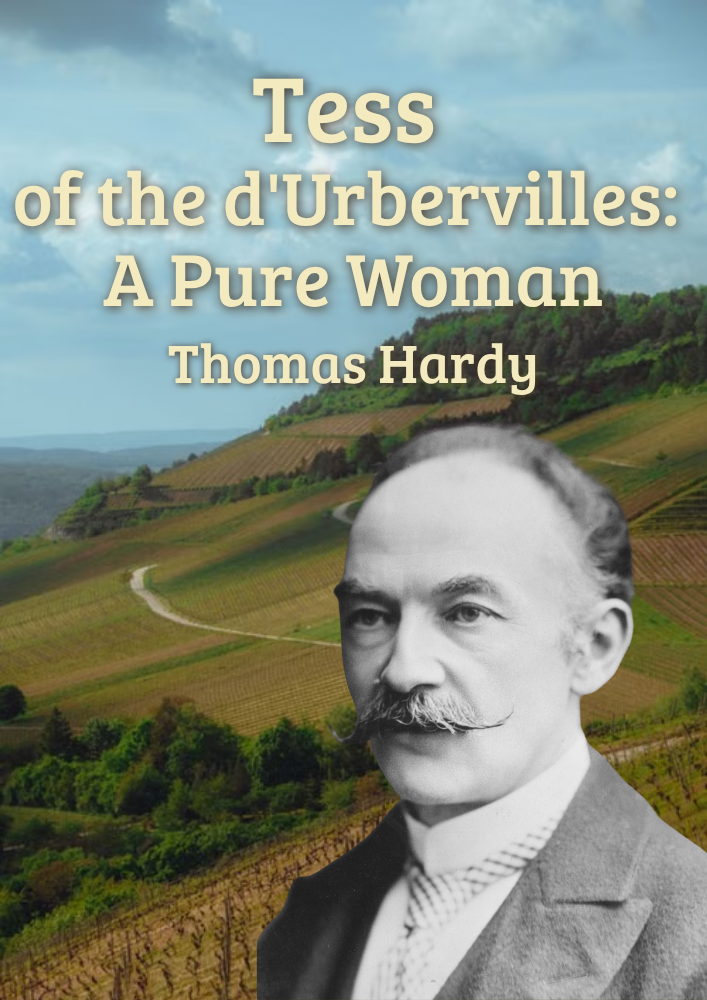
Story:
When a village parson tells John Durbeyfield that his family descends from the ancient d'Urbervilles, the news sends his daughter Tess toward a richer branch of the name—and into a future she never chose. Between Alec d'Urberville's pursuit and Angel Clare's idealism, Tess tries to make a life through work, love, and stubborn endurance while society judges her by rules it does not apply equally. Hardy's Wessex is beautiful, but beauty offers no shelter from class, chance, or sexual double standards.
Reading Highlights:
The novel's power lies in the distance between Tess as others imagine her and Tess as the reader comes to know her. Hardy combines pastoral landscapes with mounting tragedy, and the seven “phases” give her life the force of a cycle that repeatedly promises renewal. Readers drawn by romance will find something sharper: a compassionate challenge to the moral vocabulary of Victorian England.
Directed by Roman Polanski; France and the United Kingdom; starring Nastassja Kinski, Peter Firth, and Leigh Lawson. The film won three Academy Awards at the 1981 ceremony and is a major international screen version of Hardy's novel.
How it differs from the book:
The production filmed its Wessex landscapes in Brittany and compresses Hardy's social narration into image, performance, and a more continuous tragic-romance line.
How to choose a reader's edition:
Choose an unabridged text that retains the subtitle A Pure Woman, all seven phases, and the full 59 chapters. Annotated editions are especially useful for Hardy's rural vocabulary, biblical echoes, and the legal and social assumptions surrounding Tess. In translation, look for a named translator and an explicit statement of completeness; shortened “young readers” versions can remove the very social detail that makes the novel morally complex.
Thomas Hardy placed Tess among his Novels of Character and Environment and gave it the provocative subtitle A Pure Woman Faithfully Presented. Published in book form in 1891 after serial publication, it brings his imagined Wessex into direct conflict with Victorian judgments about class, sexuality, and respectability. Tess is one of the clearest examples of Hardy's ability to make landscape beautiful while allowing social rules and chance to turn that beauty tragic.
Miva: the next reading experience beyond audiobooks
Listen like an audiobook, then ask anything, anytime.
Start Miva's narrationMiva does not just narrate. It keeps explaining based on what you ask.