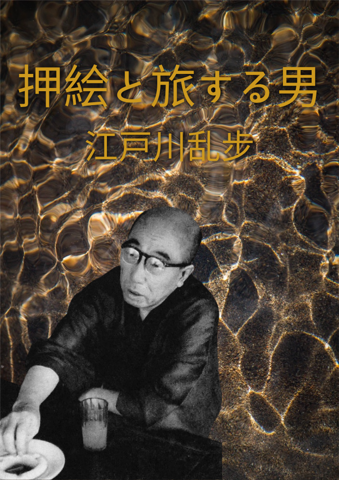
A woman in paper boarding a train: Ranpo's most exquisite fantasy of forbidden love.
The Traveler with the Pasted Rag Picture (Oshie to Tabisuru Otoko) opens with a chance encounter on a journey, gradually unfolding a bizarre tale of imagery, the gaze, longing, and the otherworldly. The figures in the oshie (pasted rag picture) are no longer merely flat art, but appear as preserved lives; the relationship between the traveler and the image transforms love into an obsession that crosses the boundaries of media and reality.
Edogawa Ranpo is both the father of Japanese detective fiction and a master of the grotesque and fantastic. He was particularly sensitive to mirrors, secret rooms, deviant love, the human body, and the mechanics of observation, often turning modern urban entertainment technology into apparatuses of horror and desire. Unlike classic whodunits, this work does not chase a solution to a mystery, but rather demonstrates how Ranpo creates a labyrinth through the act of "seeing" itself.
Drawing parallels to modern works, The Traveler with the Pasted Rag Picture can be compared to the layered realities that emerge in Haruki Murakami's novels, or the overlapping of imagery, memory, and identity in the films of Satoshi Kon. It serves as an excellent soft-focus entry point into Ranpo's macabre aesthetics.
Miva: the next reading experience beyond audiobooks
Listen like an audiobook, then ask anything, anytime.
Start Miva's narrationMiva does not just narrate. It keeps explaining based on what you ask.