Work Background:
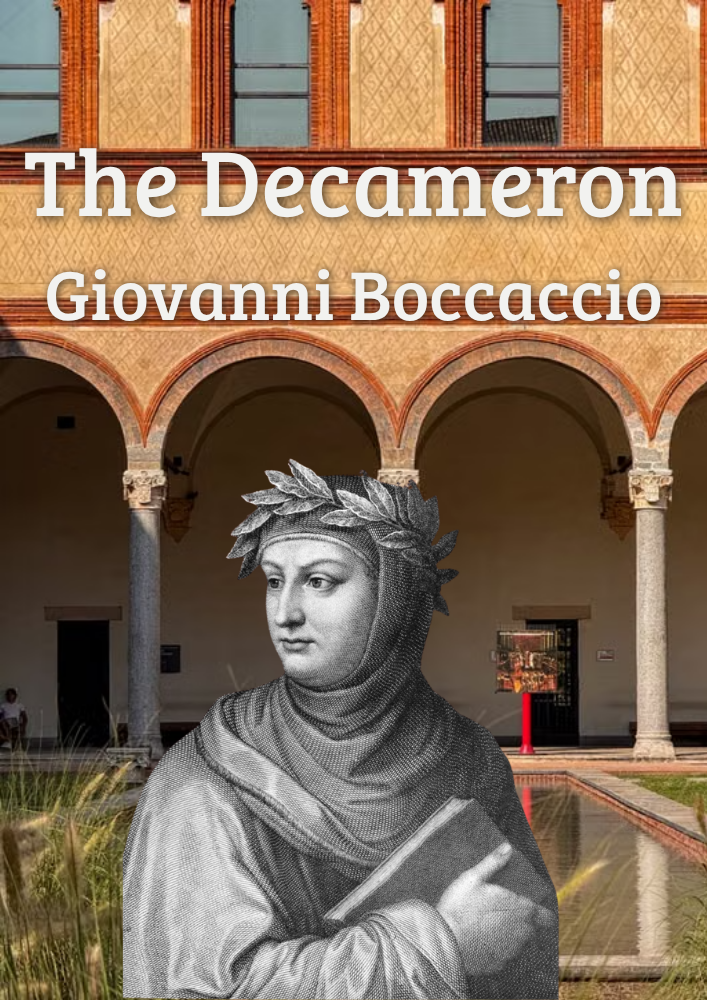
The Decameron, by Giovanni Boccaccio, first appeared in c. 1349–1353. Boccaccio combined mercantile observation, classical learning, vernacular experiment, and earlier tale traditions in the work that most fully established his narrative range. Its frame and hundred tales became a major model for European prose fiction, demonstrating how a collection can hold conflicting voices and moral judgments without resolving them into one doctrine. One hundred tales are organized by ten storytellers over ten days outside plague-stricken Florence. The frame turns storytelling into a social practice governed by daily themes, exceptions, songs, and competing moral judgments. This context explains the work's choice of voice, structure, and genre, while helping readers recognize the literary setting and social institutions surrounding its first publication or performance. Readers may notice how public rules enter private judgment, how repeated images change meaning, and how form controls what can be known at each stage.
Story Overview:
Ten young Florentines withdraw from the plague and create an ordered storytelling community in the countryside. Over ten days they tell one hundred tales of fortune, intelligence, love, deception, generosity, and cruelty, with daily rulers and themes giving shape to the variety. This summary identifies only the central situation and direction without revealing the ending. As speakers, settings, scale, or social positions change, earlier events take on new meanings; the work's effect lies not only in its incidents but also in pacing, point of view, silence, and the distance between what characters understand and what readers can infer.
Director: Pier Paolo Pasolini
Production country: Italy, France, and West Germany
Principal cast: Franco Citti, Ninetto Davoli, Jovan Jovanović, and Angela Luce
Difference from the book: Pasolini selects roughly nine tales, shifts emphasis toward bodies and popular comedy, and appears as Giotto's pupil; the ten-day frame and full hundred-story architecture are abandoned.
Director: Paolo and Vittorio Taviani
Production country: Italy and France
Principal cast: Lello Arena, Paola Cortellesi, Carolina Crescentini, and Flavio Parenti
Difference from the book: The film keeps the plague refuge but chooses five tales and gives the storytellers a continuous visual world, greatly reducing the book's scale and variety.
The selected full text is the verified digital edition numbered 23700. Market titles include: The Decameron; Decamerone; Décaméron; Decamerón; Das Dekameron; 十日談. When choosing an edition, distinguish complete, abridged, annotated, modernized, and collected versions, and verify the translator, publisher, and year for each.
Its frame and hundred tales became a major model for European prose fiction, demonstrating how a collection can hold conflicting voices and moral judgments without resolving them into one doctrine. Boccaccio combined mercantile observation, classical learning, vernacular experiment, and earlier tale traditions in the work that most fully established his narrative range. These qualities place the book at a specific point in the author's career and in the development of its genre. Its influence rests on recognizable questions of language, structure, history, and judgment rather than on a vague label of “classic.” Reading the full text beside another translation, stage production, or film reveals what later editors, translators, actors, and directors preserve, explain, compress, or rearrange, and brings out formal effects that summaries often conceal.
Reading another work from the same author's career also shows which concerns persist and which methods change. The book remains open to interpretation, disagreement, and rereading because readers can return to its actual language and arrangement instead of allowing later reputation to replace the experience of reading.
Miva: the next reading experience beyond audiobooks
Listen like an audiobook, then ask anything, anytime.
Start Miva's narrationMiva does not just narrate. It keeps explaining based on what you ask.