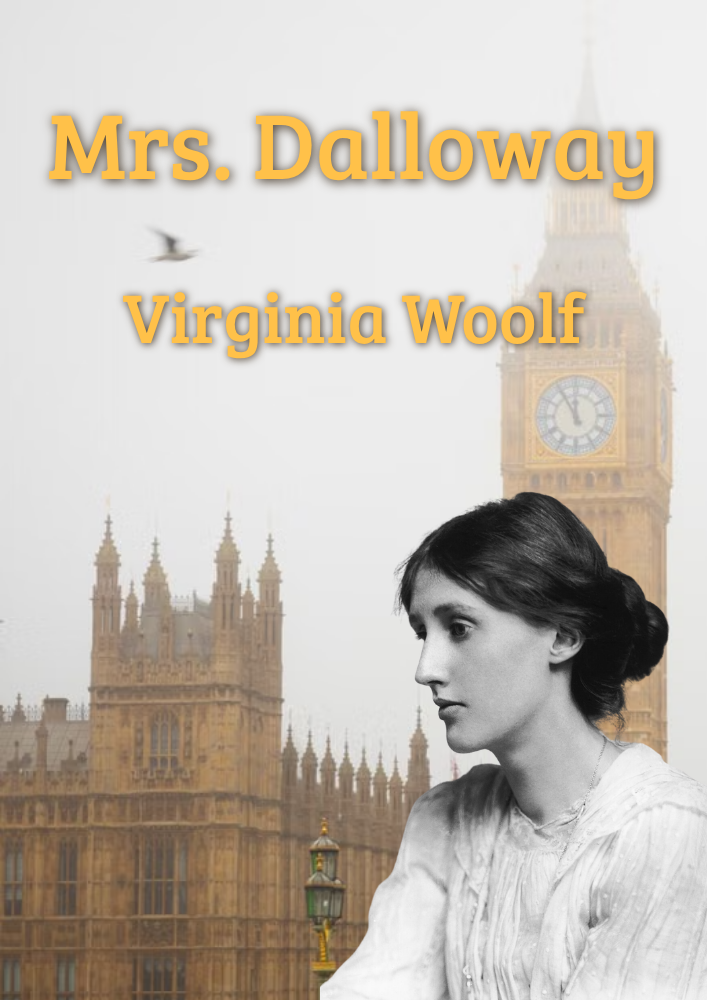
Story:
On a bright June morning, Clarissa Dalloway steps into London to buy flowers for the party she will give that evening. As she crosses the city, old choices return: Peter Walsh, the life she might have lived, and the distance inside her marriage. Elsewhere, Septimus Warren Smith, a veteran haunted by the First World War, struggles to be heard. Their paths never truly meet, yet one day binds their private worlds together.
Reading Highlights:
Woolf turns an ordinary day into a map of consciousness. Thoughts pass from one person to another through streets, bells, memories, and overheard sights; time is measured both by Big Ben and by the mind's sudden leaps into the past. The reward is not a conventional plot but the feeling of entering a crowded city where every life contains an unseen history.
Directed by Marleen Gorris; United States, United Kingdom, and the Netherlands; starring Vanessa Redgrave, Natascha McElhone, and Michael Kitchen. This feature film gives Woolf's inward novel a visible dramatic shape through performance, voice-over, and remembered scenes.
How it differs from the book:
The novel moves fluidly among many minds without chapter breaks; the film must assign memories and interior reflections to spoken voice, flashback, and a clearer visual chronology.
How to choose a reader's edition:
The novel is a continuous text, so editions that preserve its paragraphing and punctuation best retain Woolf's rhythm. First-time readers may welcome notes on postwar London, shell shock, and recurring names, but should avoid adaptations presented as the novel. A good translation needs to preserve shifts of viewpoint and sentence cadence, not merely convey the day's events.
Virginia Woolf published Mrs Dalloway in 1925 during the central phase of her modernist experimentation. Drawing together material she had explored in shorter fiction, she abandoned a conventional sequence of chapters for a single day shaped by memory and shifting consciousness. The result joins her formal innovations to concerns that recur throughout her work: time, gender, social performance, mental distress, and the fragile boundary between separate lives.
Miva: the next reading experience beyond audiobooks
Listen like an audiobook, then ask anything, anytime.
Start Miva's narrationMiva does not just narrate. It keeps explaining based on what you ask.