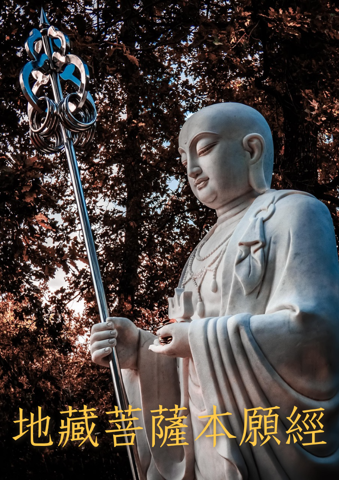
Background:
The current version of this sutra is divided into thirteen chapters. It is traditionally attributed to the Tang Dynasty translator Śikṣānanda and focuses on the original vows of Kṣitigarbha Bodhisattva, the karmic law of cause and effect, the salvation of the deceased, and narratives of filial piety. Modern research discusses its translation history differently; readers should consider traditional attributions alongside academic discussions.
Introduction:
The assembly begins in the Trāyastriṃśa Heaven. Through dialogues between the Buddha, Kṣitigarbha Bodhisattva, and various gods and ghost kings, it narrates Kṣitigarbha's vows in past lives, the karmic retribution of hell, the benefits of reciting the name and making offerings for both the living and the dead, and finally, the entrustment of protecting human and heavenly beings.
Literary Features:
The long-form text interweaves chapters, dialogues, karmic stories, and repeated exhortations, creating a structure suitable for chanting and recitation. Vernacular annotations should distinguish between sutra narrative, religious practice, and later folk customs, while explaining transliterations, names, worldviews, and the connections between chapters.
No adaptations are currently listed.
Main Version:
This version uses "Kṣitigarbha Bodhisattva Pūrvapraṇidhāna Sūtra" as the standard title, with the author, editor, or traditional attribution listed as "Translated by Śikṣānanda (Traditional Attribution)." The main text spans from Chapter 1 (Miraculous Powers in the Trāyastriṃśa Heaven) to Chapter 13 (The Entrustment of Humans and Devas). Common search titles include: Kṣitigarbha Sutra; Earth Store Sutra; Kṣitigarbha Bodhisattva Pūrvapraṇidhāna Sūtra.
Reading Suggestions:
The focus of this guide is on obtaining the full text and vernacular annotations. When reading this Buddhist classic, one should separate the original text, later commentaries, modern vernacular translations, and selected teaching materials; if quoting, refer back to the complete text and specific chapters for verification.
East Asian editions often include outlines, commentaries, or liturgical rituals. Readers should first distinguish the core sutra text from later additions.
Miva: the next reading experience beyond audiobooks
Listen like an audiobook, then ask anything, anytime.
Start Miva's narrationMiva does not just narrate. It keeps explaining based on what you ask.