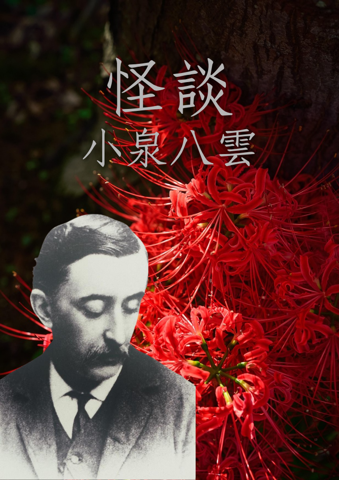
The classic gateway that transformed Japanese ghost legends into world literature.
Kwaidan: Stories and Studies of Strange Things is the most representative collection of Japanese ghost stories from Lafcadio Hearn's later years. It includes famous tales such as "Hoichi the Earless," "Yuki-Onna," "Jikininki," and "Aoyagi," as well as "Insect Studies" covering butterflies, mosquitoes, and ants. The Project Gutenberg version preserves the original 1904 English text, showcasing how Hearn wove ancient books, local legends, and firsthand accounts into subtle, restrained, and hauntingly resonant prose. These are not merely jump-scare horror stories; they place Buddhist karma, the tragic history of samurai clans, folk beliefs, perceptions of nature, and views on death within the same nocturnal landscape, leading readers to feel that ghosts are not anomalies, but rather the shapes of memories and emotions that have yet to find rest.
Lafcadio Hearn (born Patrick Lafcadio Hearn in 1850 in Lefkada, Greece) was the son of an Irish military surgeon and a Greek mother from Kythira. He spent his youth moving between Ireland, Britain, and France, lost his sight in his left eye at age 16, and traveled alone to America at 19, where he gained fame in Cincinnati, New Orleans, and Martinique for his journalism, folklore observations, and cross-cultural writing. After arriving in Japan in 1890, he taught and wrote in Matsue, Kumamoto, Kobe, and Tokyo. In 1896, he married Koizumi Setsu, naturalized as a Japanese citizen under the name Koizumi Yakumo, and passed away in 1904. Hearn's life of wandering, his mixed heritage, and his sensitivity to marginalized cultures allowed him to uniquely understand the similarity between "the stranger" and "the ghost": both wander between the familiar and the unknown, the living and the dead, the modern and the ancient.
This book is deeply connected to the author's life. Hearn did not treat Japanese ghost stories as mere exotic curiosities; instead, he used his distance as an outsider, the rootlessness caused by family displacement, and his journalistic observation to reshape the atmosphere of Japanese folklore. He often preserved the gaps and inexplicability of the stories, never rushing to eliminate ghosts with logic, but instead allowing readers to experience the psychological truth of "how those who believed saw the world." If compared to modern works, Kwaidan resonates with Natsuhiko Kyogoku’s literary treatment of yokai lore, the sense of the otherworldly found in the cracks of daily life in Haruki Murakami’s novels, and Hayao Miyazaki’s invocation of ancient spirituality and reverence for nature; in the context of world literature, it echoes the gentle, shadow-rich narratives of Neil Gaiman's mythological retellings.
Miva: the next reading experience beyond audiobooks
Listen like an audiobook, then ask anything, anytime.
Start Miva's narrationMiva does not just narrate. It keeps explaining based on what you ask.