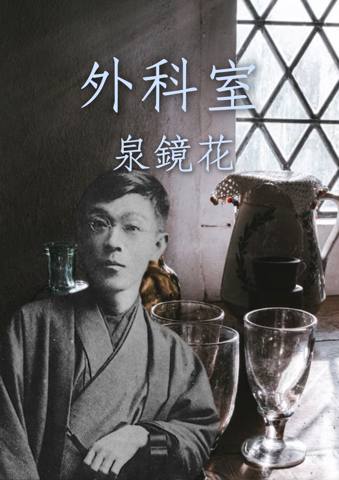
Love and Secrets Before the Scalpel: The Origin of Izumi Kyōka's Aesthetic Grotesque
The Operating Room uses a concise narrative to depict the tense relationship between love, shame, the body, medicine, and death. While the story is centered in an operating theater, it exposes long-suppressed emotions. Its eeriness does not rely on the appearance of supernatural beings but stems from the unspeakable oaths and obsessions hidden deep within the human heart.
Izumi Kyōka (born Izumi Kyōtarō, 1873 in Kanazawa) lost his mother at a young age and later moved to Tokyo to study under Ozaki Kōyō. In 1895, "The Night Patrol" and The Operating Room brought him literary acclaim, and in 1900, The Holy Man of Mount Koya solidified his reputation. His works often opposed Naturalism, leaning toward fantasy, romanticism, female worship, the grotesque, and pre-modern sentiments, profoundly influencing Japanese Shinpa drama and modern visionary literature.
The Operating Room is a distillation of Kyōka's early aesthetics: modern hospital settings juxtaposed with classical passions, where rational technology forces out mysterious emotions. In a modern context, it resonates with the aesthetic suspense of Hiroko Minagawa and Natsuhiko Kyogoku, or the collision of cold emotion and death aesthetics found in Otsuichi's short stories.
Miva: the next reading experience beyond audiobooks
Listen like an audiobook, then ask anything, anytime.
Start Miva's narrationMiva does not just narrate. It keeps explaining based on what you ask.