The Satirical Masterpiece of the Italian Enlightenment
The Poem That Dressed Social Critique in the Language of Epic
The Beginning of Modern Italian Civil Literature
The Work That Made Foscolo Believe in the Poet as Moral Witness
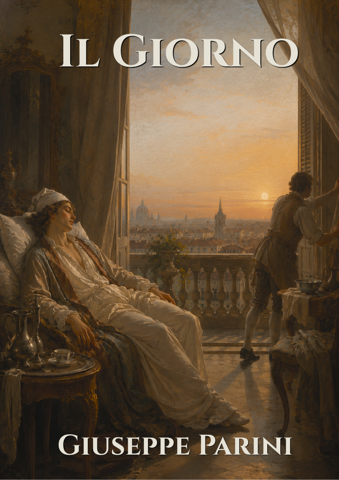
The Young Lord wakes late. Takes chocolate. Dresses. Visits. Dines. The poem uses the voice of Homer to describe it. That is the entire joke. That is the entire indictment.
Published beginning in 1763, The Day is Giuseppe Parini's satirical masterpiece and one of the most important works of the Italian Enlightenment. Divided across five parts—The Morning, Midday, Vespers, Evening, and Night—the poem follows a young aristocrat from his late awakening to the end of his evening festivities: chocolate, dressing rituals, gallant visits, fashionable lunches, society games, and frivolous conversation, all narrated in the solemn register of classical epic.
This is the engine of the work. Parini adopts a style inspired by Homer and Virgil to describe actions of perfect insignificance. The grandeur of the form and the emptiness of the content are held in precise, devastating tension. The poet appears to celebrate the aristocratic world. He is, in reality, dissecting it.
"Parini does not attack the Young Lord. He honours him—in exactly the tone the Young Lord would wish—and lets that honour be the wound."
The protagonist, the "Young Lord," represents a social class in terminal decline: incapable of finding meaning beyond luxury, unable to imagine a life outside social convention and appearance. Through him, Parini condemns a society that has replaced civic commitment and honest work with the performance of existing.
The influence of Alexander Pope's The Rape of the Lock is unmistakable, especially in the mock-heroic irony, but Parini fuses it with French Enlightenment thought and European moral reflection into something distinctly Italian and distinctly his own.
Though left unfinished, The Day cast a long shadow. Ugo Foscolo revered Parini and made him a symbol of the morally upright intellectual standing firm in a corrupt world. The poem is now considered the origin point of modern Italian "civil literature"—writing that unites stylistic elegance, social satire, and genuine moral weight.
The Young Lord has long since left his chocolate to cool. The poem watching him has not aged a day.
Miva: the next reading experience beyond audiobooks
Listen like an audiobook, then ask anything, anytime.
Start Miva's narrationMiva does not just narrate. It keeps explaining based on what you ask.