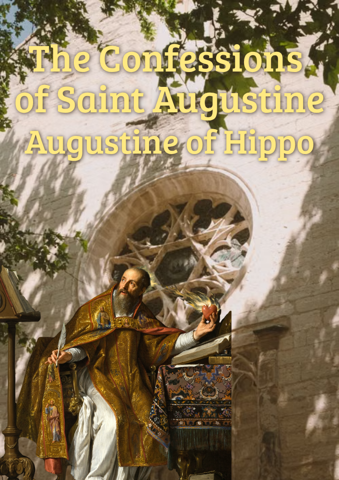
Background:
Augustine of Hippo composed the Confessions in Latin around 397–400. It recalls his education, desires, intellectual errors, and conversion, but it is also an extended prayer addressed directly to God. “Confession” therefore means the admission of sin, a profession of faith, and praise.
Story Summary:
Beginning with childhood and youth, Augustine asks why he pursued reputation, knowledge, and sensual fulfillment, and how his life changed through experiences in Milan. The final books turn from remembered life to memory, time, creation, and the interpretation of Genesis; they are not a conventional continuation of the biography.
Literary Form:
Across thirteen books, autobiography repeatedly becomes philosophy, scriptural interpretation, and prayer. Augustine does not simply report a settled past. He examines how memory constructs that past and whether language can adequately describe inward experience, giving the work both intimacy and intellectual difficulty.
Director: Christian Duguay
Production countries: Italy, Germany, and Poland
Principal cast: Alessandro Preziosi, Franco Nero
Reason for inclusion: This television miniseries gives a substantial dramatic treatment of Augustine's religious and political world.
Difference from the book: It converts inward prayer and philosophical reflection into visible events and conflicts, while drawing on later biographical material outside the Confessions.
Main Edition:
E. B. Pusey's English translation uses stately nineteenth-century religious prose. It is historically influential but often syntactically demanding. First-time readers may prefer a modern translation with historical and philosophical notes; research use should preserve book and chapter numbering and permit comparison with the Latin.
Reading Recommendation:
The first nine books can be followed as a life narrative. Slow down from Book X onward and approach the discussions of memory, time, and interpretation as major arguments in their own right.
Cultural Significance:
The Confessions profoundly shaped Western autobiography and introspective writing, yet its purpose is not merely self-portraiture. Augustine rereads a life as a relationship between the soul and God, a form that later religious testimony, philosophy, and psychological narrative continued to transform.
Miva: the next reading experience beyond audiobooks
Listen like an audiobook, then ask anything, anytime.
Start Miva's narrationMiva does not just narrate. It keeps explaining based on what you ask.