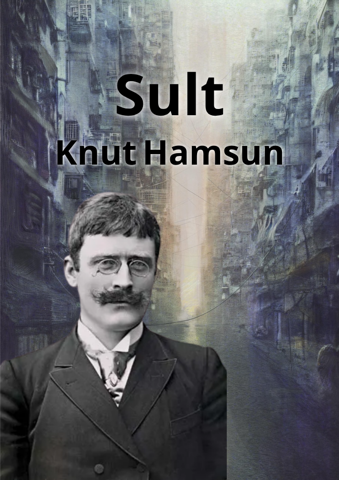
Sult (Hunger) follows an impoverished writer drifting through the streets of Kristiania (now Oslo). In this book, hunger is not just a physical state; it alters language, dignity, hallucinations, and self-perception. As the protagonist unravels, he stubbornly maintains a kind of absurd pride.
Knut Hamsun lived in poverty in his early years, working various jobs and seeking a living in America; Hunger brought him fame and is often regarded as a crucial starting point for the modern Norwegian novel. The relationship between the work and the author's life is particularly sharp: Hamsun transformed the drifting of the lower classes, creative anxiety, and neurotic perception into a first-person tremor, ensuring the novel no longer just narrated events but directly simulated a loss of conscious equilibrium.
Modern comparisons can be drawn with Dostoevsky's Underground Man, Bret Easton Ellis's narratives of self-destruction, or Ottessa Moshfegh's misanthropic, isolated, and darkly humorous inner monologues. It belongs on the shelf labeled "Where Modern Anxiety Begins."
The modernity of Hunger lies in the fact that it does not portray poverty merely as an external environment, but as a form of consciousness. The protagonist's thoughts fluctuate wildly, oscillating between grandiosity and self-abasement; he can feel a surge of dignity from a stranger's glance or fall into a rage over a small pittance. His language is as unstable as a body temperature; readers are not observing the story of a poor man from the sidelines, but are pulled into a body deprived of food, sleep, and social recognition.
This book is especially critical within the theme of "The Underground," as it pushes Dostoevskian self-laceration into the urban streets. While the Underground Man hides in thought to attack the world, Hamsun's hungry narrator maintains a fragile pride while moving between streets, newspaper offices, pawnshops, and rented rooms. Modern readers familiar with the self-performance of the social media era, gig economy anxiety, and creator burnout will find Hunger far from distant: it depicts how, when one lacks a stable position, even self-respect becomes a luxury that consumes energy.
Miva: the next reading experience beyond audiobooks
Listen like an audiobook, then ask anything, anytime.
Start Miva's narrationMiva does not just narrate. It keeps explaining based on what you ask.