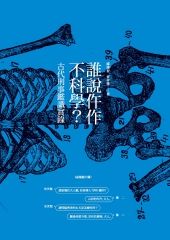
This book compiles judicial cases from famous ancient texts such as "Collected Cases of Injustice Rectified" (Xi Yuan Ji Lu), "Parallel Cases from under the Pear Tree" (Tang Yin Bi Shi), and "The Magic Mirror for Solving Cases" (Zhe Yu Gui Jian). In addition to detailed explanations of the original classical Chinese, it meticulously analyzes the forensic technology, medical jurisprudence, and criminal investigation techniques used, pairing them with real modern-day cases. Reading this will allow you to experience the scenes firsthand, making it easy to travel between ancient and modern crime scenes!
This book organizes the forensic medicine sections of ancient classics with easy-to-understand annotations, accompanied by forensic explanations and contemporary cases. Through the masterful writing of Professor Tsou and Professor Tseng, the once-difficult classical Chinese and complex forensic principles are made accessible, allowing readers a glimpse into the full scope of wisdom left by our ancestors. -- Chen Yong-fu, Department of Forensic Science, Central Police University
This book collects twenty types of forensic literature from the Song to the Qing Dynasties. After reading it, only the words "eye-opening" can describe the experience. Why do I say eye-opening? The authors annotate ancient cases, provide vernacular translations, and then compare ancient and modern forensic theories and criminal investigation methods, along with actual crime scene photographs. Finally, several current domestic and international cases are attached to prove that this wisdom existed hundreds of years ago. "History is the best mirror"—this saying is truly accurate. Although there is much classical Chinese and forensic terminology, I still read it with great interest! -- Lu Ren, Mystery Novelist
Thanks to film and television, criminal forensics and medical examination have become "essential" investigative methods for the general public when reading social news and crime stories, and are key to convictions and sentencing. Fast-paced editing and special effects often lead people to marvel at how "advanced Western technology is." But wait—don't assume the grass is greener on the other side. Since the Qin and Han dynasties over two thousand years ago, China has had quite systematic and mature research techniques and interrogation methods.
This is no exaggeration. In the book "Who Says Coroners Aren't Scientific," modern investigative techniques are compared with ancient texts like "Xi Yuan Lu," and one can see that our ancestors were quite impressive! The whole book is paired with case investigations that occurred in Taiwan (with very "realistic" photo descriptions, so please be mentally prepared). While traveling between past and present, one can appreciate the progressive fun of the investigator's accumulating experience and more refined reasoning. Readers with a strong thirst for knowledge should definitely buy and study this; fans of mystery novels and dramas can also broaden their horizons. Highly recommended. -- Dong Yang, Mystery Critic
Miva: the next reading experience beyond audiobooks
Listen like an audiobook, then ask anything, anytime.
Start Miva's narrationMiva does not just narrate. It keeps explaining based on what you ask.