A Young Prince Journeys Beyond the Borders of the Known World
William Morris's Foundational Fantasy Quest
Archaic Language, Perilous Roads, and the Water of Immortality
The Forgotten Romance That Helped Make Tolkien Possible
Before the celebrated masterpieces came The Well at the World's End: an early work in which William Morris's defining concerns were already taking shape.
The Well at the World's End entered literary history as a work once visible enough to shape popular taste, yet now often remembered only at the edges of the canon. . R. R. Tolkien
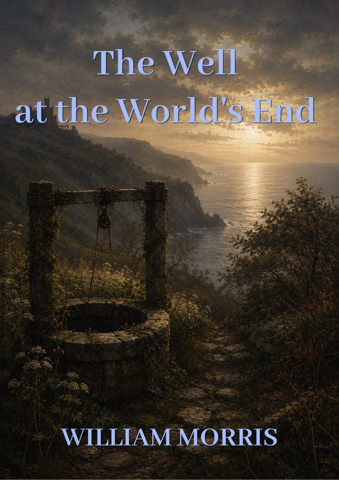
The Well at the World's End is a high fantasy novel by the British textile designer, poet, and author William Morris. It was first published in 1896 and has been reprinted repeatedly since, most notably in two parts as the 20th and 21st volumes of the Ballantine Adult Fantasy series, in August and September 1970.
Morris tells the story of Ralph, the youngest son of King Peter of Upmeads. Ralph and his three elder brothers are bored with the provincial life, so one day they request permission from their father to explore the world. The king allows the three eldest sons to depart, but bids Ralph to stay to ensure at least one living heir. Ralph, desperate for adventure and against his father's will, sneaks away. Ralph's explorations begin at Bourton Abbas, where he encounters Ursula, a kind maiden who seems to share his longings, after which he goes through the Wood Perilous. His adventures there include killing two men who had entrapped a woman.
Ralph of Upmeads leaves his protected home in search of the legendary well whose water grants renewed life. His road passes through imagined kingdoms, dangerous forests, captivity, love, loss, and warfare, establishing the journey itself—not merely the magical object—as the centre of heroic transformation.
Morris wrote before commercial fantasy existed as a recognised genre. His invented geography, medievalising prose, fellowship of travellers, and quest structure helped demonstrate that a novel could take place wholly inside a secondary world. Those choices became crucial to later fantasy, especially the tradition associated with C. S. Lewis and J. R. R. Tolkien.
Why The Well at the World's End Still Matters
Read today, The Well at the World's End offers more than the curiosity of a famous writer's beginning. It preserves the risks, experiments, and unresolved tensions of a literary voice before later success made that voice familiar.
Return to the beginning, and discover how The Well at the World's End first opened the path ahead.
Miva: the next reading experience beyond audiobooks
Listen like an audiobook, then ask anything, anytime.
Start Miva's narrationMiva does not just narrate. It keeps explaining based on what you ask.