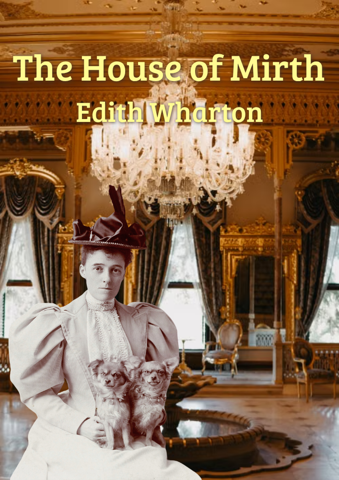
Background:
Published in 1905, the novel examines elite New York society at a moment when inherited status, new money, speculation, and mass publicity were changing its rules. Wharton treats drawing rooms, country houses, hotels, and railway journeys as economic spaces in which reputation can function like unstable credit.
What kind of book is it?
Lily Bart possesses beauty and social fluency but little independent money. Her effort to secure a place within the world that trained her becomes increasingly precarious as friendship, marriage, debt, work, and rumor impose incompatible demands.
Literary style:
A close third-person narration gives access to Lily's intelligence while preserving the judgments and blind spots of the surrounding society. Motifs of display, tableaux, gambling, letters, and exchange connect social elegance to material pressure; shifts of setting mark changes in who can see and define her.
Director: Terence Davies
Production country: United Kingdom / France / Germany / United States
Cast: Gillian Anderson, Eric Stoltz, Laura Linney
Why it matters: A useful, identifiable screen version for comparison.
Difference from the book: compresses the chronology and social network while using interiors and silence to foreground Lily's isolation.
Main editions and translations:
The English novel is divided into two Books. Scribner, Oxford World's Classics, and Penguin editions differ chiefly in introductions, explanatory notes, and archival material rather than in translation. New readers benefit from notes on money, divorce, hotels, and New York social geography; the narrative itself should remain unabridged.
Reading recommendation:
The English novel has Book I and Book II. Oxford World's Classics and Penguin Classics chiefly differ in introductions and notes on money, divorce, hotels, and New York geography. An unabridged annotated edition is the most useful first choice.
Cultural significance:
The book is central to American realism and to the literature of women, consumption, and class performance. Its critique works through material details rather than a simple contrast between sincere individuals and a corrupt society, which keeps Lily's choices open to argument.
Place in the author's writing:
The novel marks Edith Wharton's arrival as a major novelist after earlier work in short fiction, travel, and design. It develops her recurring study of how rooms, manners, and inherited codes regulate desire, later revisited from different historical angles in The Custom of the Country and The Age of Innocence.
Miva: the next reading experience beyond audiobooks
Listen like an audiobook, then ask anything, anytime.
Start Miva's narrationMiva does not just narrate. It keeps explaining based on what you ask.