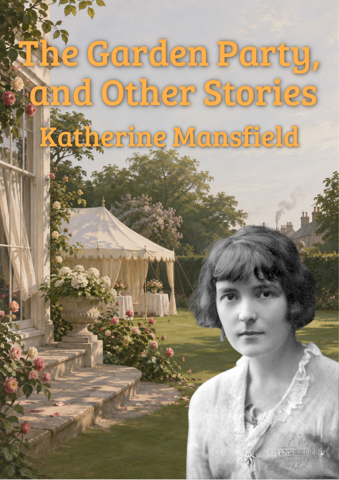
Mansfield's stories make their strongest effects in the space after a sentence seems to have finished. A garden party, a family meal, a child at a window, or a room prepared for visitors becomes an occasion for a character to notice something that cannot be comfortably said. The collection is best approached not as a set of tidy twists but as a sequence of changes in attention.
Its social world is exquisitely observed and persistently unstable. Class distinction, grief, desire, and embarrassment appear through pauses, sensory detail, free indirect style, and abrupt endings.
Director: Jack Sholder
Production country: United States
Cast: Beatrice Straight, Maia Danziger, Mark Metcalf, Jessica Harper
Why it matters: ACMI preserves this 25-minute adaptation in its moving-image collection.
Difference from the book: The film moves Mansfield’s colonial Wellington setting to New England at the end of the Second World War.
A complete collection is preferable because the stories illuminate one another through contrast of length, voice, and setting. Editions vary in their contents and ordering, so readers should check which stories are included before comparing a quotation or adaptation. An edition with notes is helpful for New Zealand references, period idiom, and the social codes that the prose often leaves implicit rather than explains.
Mansfield's modernist method depends on restraint rather than obscurity. She can make an ordinary social ritual feel charged without announcing the moral.
Miva: the next reading experience beyond audiobooks
Listen like an audiobook, then ask anything, anytime.
Start Miva's narrationMiva does not just narrate. It keeps explaining based on what you ask.