"Liu Shaoqi's bourgeois reactionary line is exactly the opposite of Chairman Mao's proletarian revolutionary line. He does not advocate for peasant wars under the leadership of the proletariat, nor for armed struggle, nor for the strategy of encircling cities from the countryside. Instead, he is obsessed with big cities, leading the proletariat to abandon political struggle and practice economism in urban trade union work. He practices capitulationism on the issue of the united front, abandoning the Party's leadership. Instead of viewing the united front as one for armed struggle, as Chairman Mao says, he wants to hand over the people's armed forces to the unified leadership of Chiang Kai-shek." —— Speech by Kang Sheng at the Enlarged Meeting of the Military Commission (April 13, 1967, excerpt)
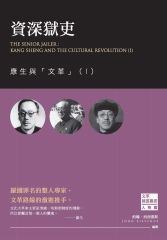
A compilation and organization of complete original historical materials, this book is divided into four volumes, detailing the on-site speeches of the senior jailer—Kang Sheng—between 1966 and 1970. In these short four years alone, the records of speeches left by Kang Sheng amount to over 1.2 million words, covering his speeches to various levels of agencies and cadres, as well as his criticisms of "anti-Party and counter-revolutionary" targets. Through the detailed primary source materials collected in this book, readers will gain a deeper understanding of the important role Kang Sheng played during the Cultural Revolution.
Miva: the next reading experience beyond audiobooks
Listen like an audiobook, then ask anything, anytime.
Start Miva's narrationMiva does not just narrate. It keeps explaining based on what you ask.