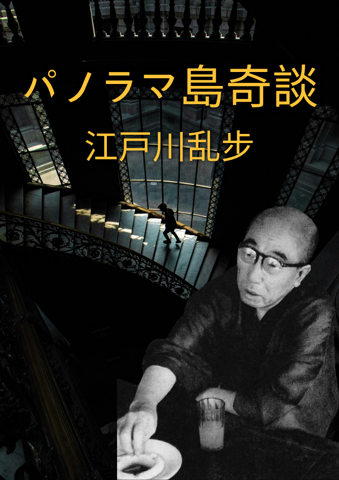
Building an Island of Desire: A Visual Labyrinth of Modern Japanese Bizarre Mystery
The Strange Tale of Panorama Island (Panoramato Kitan) is one of Edogawa Ranpo's representative works, pushing crime, hallucination, visual spectacle, and abnormal desire to their extremes. The story revolves around an island transformed into a massive artificial paradise, compressing beauty, wealth, doubles, death, and insane imagination into spectacles akin to cinematic storyboards. It is not just a mystery novel, but also a fantasy allegory about how modern man is consumed by the spectacle.
Edogawa Ranpo, born Taro Hirai in 1894 in Mie Prefecture, graduated from Waseda University and entered the literary world in 1923 with "The Two-Sen Copper Coin." Heavily influenced by authors such as Edgar Allan Poe, Arthur Conan Doyle, and G.K. Chesterton, his pen name is a Japanese phonetic pun on Edgar Allan Poe. Ranpo later created iconic characters like Kogoro Akechi and the Boy Detectives Club, and promoted the Mystery Writers of Japan and the Edogawa Ranpo Prize, making him a pivotal figure in the institutionalization of Japanese mystery and bizarre literature.
This work's connection to Ranpo's life lies in how it transforms his obsession with Western detective novels, urban entertainment, pulp magazines, and visual spectacles into a Japanese-style nightmare. In a modern context, it shares Kyogoku Natsuhiko’s deconstruction of bizarre knowledge and criminal psychology, while approaching the feeling of space itself becoming a source of horror found in Junji Ito’s manga. Within the context of visual culture, it can also be read alongside the aesthetics of Satoshi Kon's works, where dreams and reality erode one another.
Miva: the next reading experience beyond audiobooks
Listen like an audiobook, then ask anything, anytime.
Start Miva's narrationMiva does not just narrate. It keeps explaining based on what you ask.