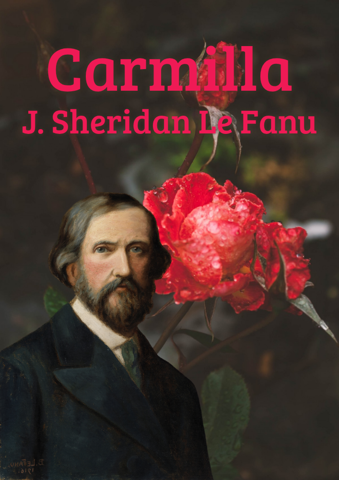
Background:
J. Sheridan Le Fanu's Carmilla was serialized in 1871–72 and later collected in In a Glass Darkly. More than two decades before Bram Stoker's Dracula, it joined a Central European estate, family history, and medical investigation in an intimate and persistently uncertain vampire narrative.
Story Summary:
Laura, who lives at an isolated Styrian castle, receives the mysterious Carmilla as a guest. Their rapid intimacy is both compelling and disturbing. As young women nearby fall ill, dreams, portraits, and buried family records begin to point toward the same secret.
Literary Form:
Laura recounts the events retrospectively, while an outer frame presents her testimony as a case preserved by Dr. Hesselius. This layered narration never entirely resolves whether fear belongs to the supernatural, disease, suppressed desire, or the later organization of memory.
Director: Roy Ward Baker
Production country: United Kingdom
Principal cast: Ingrid Pitt, Madeline Smith, Peter Cushing
Reason for inclusion: It is one of Hammer Film Productions' most representative adaptations of the novella.
Difference from the book: The film intensifies eroticism and violent pursuit and expands the activity of characters such as General Spielsdorf; the novella remains more tightly bound to Laura's limited recollection.
Main Editions:
Carmilla appears both independently and within the case-history frame of In a Glass Darkly. Check whether an edition preserves the complete 1872 text, preface, and chapter titles, and whether illustrations or modern rewriting are separately copyrighted.
Reading Recommendation:
Notes on nineteenth-century medicine, gender, and Styrian geography are useful. When comparing translations, pay particular attention to the balance of tenderness, threat, and ambiguity in Carmilla's speech to Laura.
Cultural Significance:
The novella established one of literature's most durable female vampires and linked vampirism to intimacy, inheritance, and family memory. Horror cinema, queer criticism, and Gothic fiction continue to reinterpret the ambiguities that the narrative refuses to close.
Miva: the next reading experience beyond audiobooks
Listen like an audiobook, then ask anything, anytime.
Start Miva's narrationMiva does not just narrate. It keeps explaining based on what you ask.