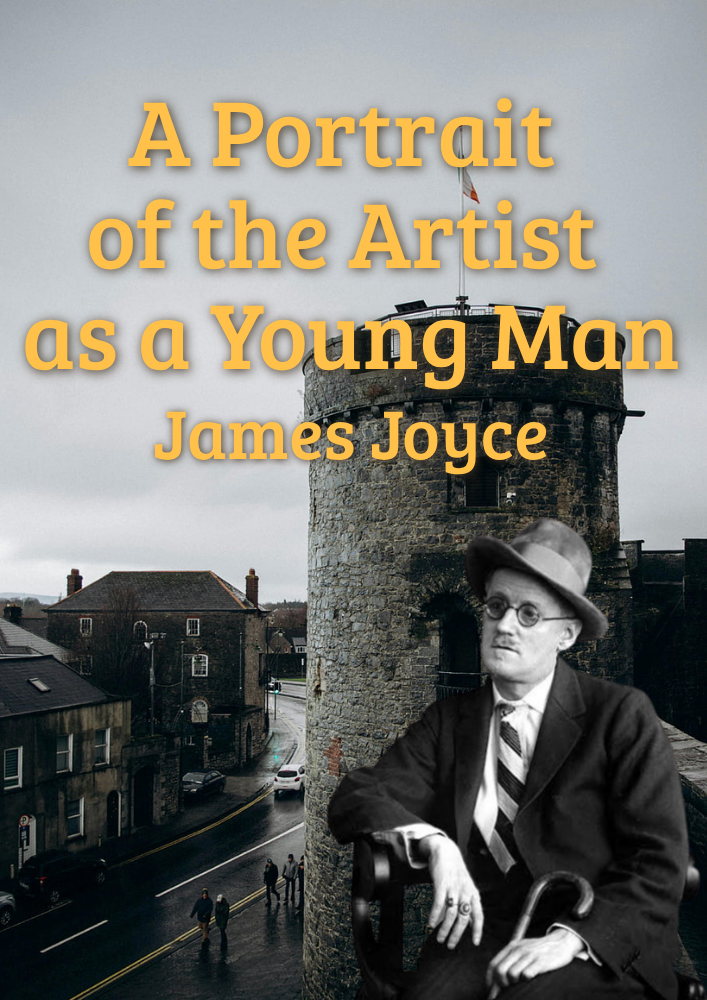
Work Background:
A Portrait of the Artist as a Young Man, by James Joyce, first appeared in 1916. Joyce transformed autobiographical material and the abandoned Stephen Hero manuscript into a more selective form in which style develops with Stephen's consciousness. Joyce's fusion of developmental narrative with an evolving prose consciousness became a landmark of modernist fiction and the artist novel. Joyce's third-person narration changes texture as Stephen Dedalus grows: vocabulary, rhythm, perception, and argument develop with the mind being represented. Recurring images of flight, nets, water, and artistic making bind the five chapters. This context explains the work's choice of voice, structure, and genre, while helping readers recognize the literary setting and social institutions surrounding its first publication or performance. Readers may notice how public rules enter private judgment, how repeated images change meaning, and how form controls what can be known at each stage.
Story Overview:
Stephen Dedalus grows from childhood through school, religious fear, sexual experience, family decline, and intellectual debate. As he begins to define an artistic vocation, the narration itself changes with his developing language and perception rather than merely reporting them from outside. This summary identifies only the central situation and direction without revealing the ending. As speakers, settings, scale, or social positions change, earlier events take on new meanings; the work's effect lies not only in its incidents but also in pacing, point of view, silence, and the distance between what characters understand and what readers can infer.
Director: Joseph Strick
Production country: Ireland
Principal cast: Bosco Hogan, T. P. McKenna, John Gielgud, and Rosaleen Linehan
Difference from the book: The film condenses childhood, school, religious crisis, sexuality, and aesthetic debate into a linear screen narrative; Joyce's evolving prose style must be translated into performance and images.
The selected full text is the verified digital edition numbered 4217. Market titles include: A Portrait of the Artist as a Young Man; Portrait of the Artist; Retrato del artista adolescente; Dedalus; 青年藝術家的畫像. When choosing an edition, distinguish complete, abridged, annotated, modernized, and collected versions, and verify the translator, publisher, and year for each.
Joyce's fusion of developmental narrative with an evolving prose consciousness became a landmark of modernist fiction and the artist novel. Joyce transformed autobiographical material and the abandoned Stephen Hero manuscript into a more selective form in which style develops with Stephen's consciousness. These qualities place the book at a specific point in the author's career and in the development of its genre. Its influence rests on recognizable questions of language, structure, history, and judgment rather than on a vague label of “classic.” Reading the full text beside another translation, stage production, or film reveals what later editors, translators, actors, and directors preserve, explain, compress, or rearrange, and brings out formal effects that summaries often conceal.
Reading another work from the same author's career also shows which concerns persist and which methods change. The book remains open to interpretation, disagreement, and rereading because readers can return to its actual language and arrangement instead of allowing later reputation to replace the experience of reading.
Miva: the next reading experience beyond audiobooks
Listen like an audiobook, then ask anything, anytime.
Start Miva's narrationMiva does not just narrate. It keeps explaining based on what you ask.