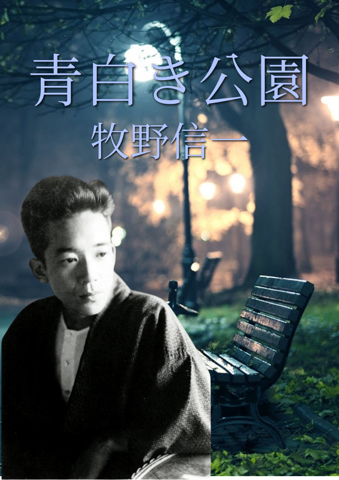
Work Background:
A fantastic short story from Shin'ichi Makino's early period, layering images of moonlight, music, and ancient civilizations. The movement itself from a real park into an imaginary narrative is central. According to the Aozora Bunko work card, it was first published across several issues of 'Shojo' (The Maiden) by Jiji Shimpo-sha between October 6, 1920, and August 8, 1921.
Synopsis:
Triggered by a moonlit balcony, a distant piano, and the starry sky, the narrator weaves a tale of Princess Saramiya and the ancient world. Fragments from current sensations and history books blend as the night scene transforms into a stage. How far must the story of the princess, born from the park's night view, progress before returning to reality? Music and moonlight transport the imagination to distant eras in succession.
Literary Characteristics:
The narrator addresses the reader directly, making no secret of the fact that the story is in the process of being created. Repetitions of light and sound, the brilliance of proper nouns, and free associations including anachronisms shape a pale, dreamlike space.
Key Elements:
Using 'poetic eeriness and a dreamlike sense' as an entry point, the reader can follow the moments when objects and places turn into evidence, and the points where first impressions of the title diverge.
Reading Guide:
The omissions and structure of the short story become clearer by following how the opening information is rearranged through description, dialogue, and scene shifts. The pace of the prose can also be observed through the furigana (rubies) and paragraphing.
There are currently no recorded adaptations.
The included text is the Japanese XHTML version published by Aozora Bunko. The source text listed on the work card is 'The Collected Works of Shin'ichi Makino, Volume 1,' published by Chikuma Shobo. This edition, which preserves the furigana, paragraphs, and kana usage, is suitable for experiencing the specific style of this work—where the narrator addresses the reader directly and repetitions of light and sound create a dreamlike space. The introduction, where moonlight and music trigger the story of Princess Saramiya, is most effective when read in this version that maintains the paragraph breaks and narrative tone. Since the original magazine publication and the later collected edition are different materials, readers should avoid confusing the publication dates and refer back and forth between the work card and the main text. As far as can be confirmed, there is no translated version that standardizes the translator, publisher, and publication year; when choosing a foreign language version, priority should be given to those that clearly state the translator and source text.
This work allows readers to observe the back-and-forth between reality and fantasy—seen in Makino's later works—through his early decorative style. It focuses more on the moment imagination arises than on a completed historical tale. The techniques used here, such as direct address to the reader and anachronistic associations, provide clues for distinguishing this from the author's other treatments of similar subjects. When comparing it to other works by the same author, focusing on the narrator's range of knowledge and the distance between reality and fantasy clarifies the unique position of 'The Pale Park'.
Miva: the next reading experience beyond audiobooks
Listen like an audiobook, then ask anything, anytime.
Start Miva's narrationMiva does not just narrate. It keeps explaining based on what you ask.