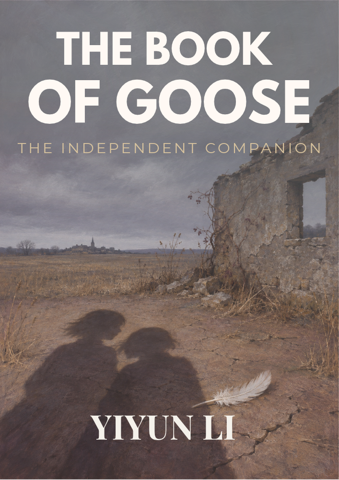
Two girls invent stories in a postwar French village; when adults turn those inventions into a literary sensation, authorship becomes a dangerous struggle over who controls whose life.
2023 PEN/Faulkner Award for Fiction, winner
Agnès remembers her intense friendship with Fabienne, their games of cruelty and imagination, and the machinery that carries a manufactured child author from village obscurity toward Paris and England. The guide follows the retrospective voice without revealing its final reckoning.
The rural village, postwar scarcity, Parisian publishing world, and English school each impose a different story on Agnès. Movement between those settings changes how adults read her body, intelligence, nationality, and silence. Fabienne remains powerful even when physically absent because Agnès continues to address, resist, and preserve her. The novel therefore asks whether telling the truth about a relationship can ever be separated from the wish to win its final argument.
Track the shifting roles of inventor, scribe, witness, editor, and public author as the girls’ private world becomes a marketable identity.
Fabienne’s brilliance offers Agnès a larger reality while also setting rules that make affection, obedience, punishment, and freedom hard to separate.
Agnès controls chronology, omission, and address. Her calm retrospective language makes readers ask what knowledge belongs to the girl she was and what belongs to the adult telling the story.
Separate the girls’ invented book from the public story adults build around it. Agnès moves among the roles of witness, scribe, collaborator, celebrity author, and retrospective narrator, while Fabienne’s absence gives Agnès final control over chronology and omission. Following those shifts makes the novel’s dark humor and power struggle visible: invention can enlarge a life and become an instrument of possession. The reading path is especially useful for discussions of friendship, publishing, childhood performance, unreliable memory, manipulation, and loss.
Choose it for a psychologically exact friendship novel in which literary creation is inseparable from rivalry, class, performance, and the dangerous wish to belong completely to another person.
This is an independent chapter guide and summary, not the original book. It is designed for review and reading support and is best used alongside the full work.
Miva: the next reading experience beyond audiobooks
Listen like an audiobook, then ask anything, anytime.
Start Miva's narrationMiva does not just narrate. It keeps explaining based on what you ask.