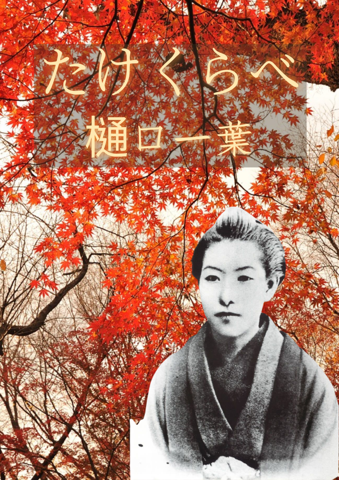
Background: Set in front of the Daion-ji Temple near the Yoshiwara district in Tokyo, Takekurabe depicts the growth of youths like Midori, Shinnyo, and Shotaro amidst streets, festivals, and games. It is a bustling and complex world of the Shitamachi (downtown), filled with merchants, temples, brothels, festivals, and rumors. While the children seem to run freely, they are already hemmed in by family professions, gender roles, and social class. Midori’s future is tied to the Yoshiwara pleasure quarters, while Shinnyo comes from a family of monks; the hazy affection between them is marked from the start by an insurmountable boundary.
Literary Features: Ichiyō Higuchi uses a classical, rhythmic prose style to depict the lives of the urban underclass in modernizing Japan. Her writing is ornate and densely paced, like a vibrant street scene full of voices. The most moving aspect of the work is that it does not rush to push the children into the adult world; instead, it details how they gradually become aware of their fates through games, quarrels, shyness, and silence. Details such as Midori handing a strip of cloth to Shinnyo or her sudden silence capture the shyness and sorrow of a girl's transition to womanhood with extreme delicacy. The novel does not explicitly condemn the system, yet it allows readers to see how the system seeps into daily life.
Synopsis: Reading Takekurabe today brings to mind many children forced to mature early by their environment. It reminds us that youth is not necessarily just about dreams and freedom; it can also be the first time one realizes their available paths are fewer than imagined. For the general reader, this book is both a story of youth and a gentle yet cruel observation of the city, class, and the fate of women. The children in the story come and go near festivals, alleys, shops, and the Yoshiwara district, their lives filled with lively sounds. Midori is lively and proud, the most dazzling presence among the children; Shinnyo is quiet and introverted, maintaining a sense of distance due to his background in a monk's family. The affection between them is not presented through clear confessions, but hidden in a moment of help, a blush, or words left unsaid. As Midori approaches the fate of being assimilated into the adult world, the bright games of childhood are stained by the shadows of parting and shyness. This story can be entered without deep literary knowledge; by following the characters' choices, hesitations, and silences, the reader feels the human condition slowly pushed before their eyes.
Encyclopedia
Author's Life: Ichiyō Higuchi (1872–1896) had a short life, supporting her family through long periods of poverty, yet she wrote multiple classics of modern Japanese literature in her twenties. She is regarded as one of the most important female writers of the Meiji period.
Relationship between Author and Work: Ichiyō was familiar with the lower-class districts of Tokyo and deeply understood the plight of women under the pressure of poverty and reputation. Takekurabe transforms her observations of street life into a delicate group portrait.
Modern Analogy: Like a youth drama series without a preachy narrator; the camera follows the children as they run, but the audience slowly realizes that the door to the adult world ahead is not fair."
Set in the vibrant, shadow-cast district of Daikoku-cho near Tokyo’s Red-light district of Yoshiwara, the story follows a group of local children teetering on the fragile edge between innocent youth and the tragic realities of adulthood. At the center of this world is Midori, a lively, charismatic girl who enjoys wealth and freedom as the younger sister of a famous Yoshiwara courtesan. Bright and generous, she spends her days playing house, hosting her friends at the local shop, and acting as the beloved leader among the neighborhood youth. Among her companions are Shota, a gentle and reliable boy from a pawnbroker family who adores Midori, and Shinnyo, the quiet, melancholic son of a Buddhist priest at Ryugeji Temple. Though Shinnyo is introverted and bound for the priesthood, an unspoken romantic tension exists between him and Midori. However, a moment of awkwardness during a school sports day, where classmates teased Shinnyo after Midori offered him a handkerchief, instills a deep, self-conscious pride in the boy. From that day on, Shinnyo treats Midori with cold indifference to avoid gossip, causing a hurt and bewildered Midori to harbor an intense resentment toward him. This delicate balance shatters during the annual shrine festival. A bitter rivalry erupts between the neighborhood’s street factions: the peaceful "Front Street" group led by Shota and Midori, and the rough "Back Street" gang led by Chokichi, the son of a local chieftain. Taking advantage of Shota’s absence, Chokichi’s gang attacks Midori’s companions. When Midori boldly steps forward to defend her friends, Chokichi hurls a dirty, mud-soaked straw sandal directly at her forehead, shouting cruel insults about her sister and predicting that Midori, too, will end up as a prostitute. The humiliation deeply scars Midori. Believing that Shinnyo, who belongs to Chokichi’s group, helped orchestrate the attack, her bitterness toward him deepens, even as both harbor unexpressed feelings for one another. The emotional climax of their silent tragedy occurs on a torrential rainy day. Shinnyo happens to stop directly in front of Midori’s house when the strap of his clog breaks. As he struggles in the mud, Midori realizes he is right outside. Yearning to help, she secretly tosses a scrap of colorful Yuzen cloth through the lattice door for him to mend his sandal. Pride and shame consume them both: Shinnyo pretends not to notice the offering, leaving the drenched cloth lying untouched in the mud as he walks away, leaving both of them in silent heartbreak. As autumn turns to winter, the cruel passage of time forces their childhood to an end. Shortly after the Otori Festival, Midori undergoes her rite of passage into womanhood. Returning home one day with her hair styled in an elaborate adult Shimada coiffure, her former wild, playful spirit vanishes. Realizing that her destiny as a courtesan is now set in motion, she locks herself away in her room, weeping and driving away her confused playmate Shota, unable to face the loss of her girlhood innocence. The final rupture comes on a cold, frosty morning. Midori finds a delicate paper narcissus left secretly at her front gate. The next day, Shinnyo leaves the district forever to enter a distant Buddhist seminary, having taken his holy vows. Midori keeps the paper flower as a quiet memory of her past, as both children are swept away into their separate, inescapable adult fates.
Midori would likely become Fujimoto's wife—or rather, as the wife of a priest, she would be called "Daikoku-sama," or so people gossiped. Shinnyo had always despised hearing such talk about others, habitually turning his head away with a sour look; how, then, could he possibly endure having such things said about himself? Ever since, whenever he heard the name Midori, a wave of dread came over him, and his heart churned with anxiety, fearing that someone was about to bring that matter up again—an indescribably unpleasant feeling. Nevertheless, since he could not very well lose his temper every single time, he tried his best to feign ignorance, putting on a calm, stern face to pass the matter by. Yet whenever he was confronted directly and asked about something, his embarrassment was overwhelming; though he usually managed to get by with a single "I don't know," a cold, agonizing sweat would run through his body, leaving him with a profound sense of helpless misery.Original: 大方美登利さんは藤本の女房かみさんになるのであらう、お寺の女房なら大黒さまと言ふのだなどゝ取沙汰しける、信如元來かゝる事を人の上に聞くも嫌ひにて、苦き顏して横を向く質なれば、我が事として我慢のなるべきや、夫れよりは美登利といふ名を聞くごとに恐ろしく、又あの事を言ひ出すかと胸の中もやくやして、何とも言はれぬ厭やな氣持なり、さりながら事ごとに怒りつける譯にもゆかねば、成るだけは知らぬ躰をして、平氣をつくりて、むづかしき顏をして遣り過ぎる心なれど、さし向ひて物などを問はれたる時の當惑さ、大方は知りませぬの一ト言にて濟ませど、苦しき汗の身うちに流れて心ぼそき思ひなりTakekurabe (Growing Up) Chapter 7 (七). It uncovers the psychological origin of Shinnyo's cold demeanor, illustrating how fragile adolescent self-consciousness and peer teasing can alienate two fond hearts.
How wonderful it would be if I could just play with dolls and paper figures forever, doing nothing but playing house! Oh, I hate it, I hate it—growing up is such a dreadful thing. Why must we age like this? If only I could go back seven months, ten months, even a year ago—she thought such aged, weary thoughts, completely unmindful of Shōta standing right beside her. Whenever he tried to speak to her, she lashed out at him, casting everything aside: "Go home, Shōta-san! For pity's sake, please go home! If you stay here, I feel as though I shall surely die!Original: 何時までも何時までも人形と紙雛あねさまとをあひ手にして飯事まゝごと許ばかりして居たらば嘸かし嬉しき事ならんを、ゑゝ厭や厭や、大人に成るは厭やな事、何故このやうに年をば取る、最う七月なゝつき十月とつき、一年も以前もとへ歸りたいにと老人としよりじみた考へをして、正太の此處にあるをも思はれず、物いひかければ悉く蹴ちらして、歸つてお呉れ正太さん、後生だから歸つてお呉れ、お前が居ると私は死んで仕舞ふであらうTakekurabe (Growing Up) Chapter 14 (十四). This passage captures the psychological threshold between childhood freedom and adult sorrow, serving as the central thematic turning point of the entire work.
While Higuchi Ichiyo wrote the novella in classical Japanese prose (bungo) combined with classical poetic cadence (7-5 rhythm), modern translations render the narrative into clear, evocative prose that remains accessible to contemporary readers. The difficulty for a modern reader lies not in the plot structure, which is intimate and human, but in recognizing the subtle socio-cultural nuances of Meiji era Tokyo. The story relies heavily on atmosphere, unspoken emotional cues, and cultural landmarks surrounding the Yoshiwara pleasure district. Understanding the distinct social hierarchy of the neighborhood, the significance of hair styles, and traditional festivals adds rich context, but the underlying story of adolescent heartbreak and growing up is entirely universal.
Takekurabe holds a monumental place in literary history because it bridged classical Japanese aesthetic traditions with modern psychological realism. Written by Ichiyo, the first major female writer of modern Japan, the work showcases extraordinary stylistic mastery, blending classical classical rhythms with vivid, realistic observations of urban working-class life. Furthermore, it offers a rare, empathetic insider perspective on the human lives surrounding the Yoshiwara district, capturing the haunting psychological transition from childhood innocence to forced adult identity with unmatched poetic grace and emotional depth.
As childhood games give way to the unyielding pressures of class and tradition, the characters reach a quiet, unavoidable threshold where unspoken feelings can no longer remain hidden. The conclusion brings no loud clashes or grand declarations, but rather a bittersweet shift in how the young world of Daikoku-cho is left behind. What awaits at the very end is a deeply quiet moment of farewell, marked by a subtle, poetic gesture left at a doorstep that signals the permanent boundary between youth and adulthood. To witness how two lives silently part under the weight of their predestined paths, one must enter the final pages and feel the quiet grief of growing up.
The setting of Daikoku-cho, situated just outside the walls of the Yoshiwara red-light district, serves as both a physical backdrop and a powerful metaphor throughout the novella. The children live in the immediate shadow of Yoshiwara, benefiting from its economic activity while remaining subject to its cruel realities. The quarter represents the inevitable adult destination that awaits characters like Midori, contrasting the bright, innocent play of youth with the looming commercialization of women and loss of personal freedom.
The title Takekurabe translates literally to "comparing heights" or "measuring heights," referencing a traditional children's game where playmates stand back-to-back against a wall or post to see who has grown taller. Metaphorically, the title signifies the physical and emotional growth of the young protagonists as they rapidly mature out of childhood. It highlights the central tragedy of the work: as the children grow taller, the gap between their social worlds widens, forcing them to measure the growing distance between their lives.
The relationship between Midori and Shinnyo embodies the tragedy of unspoken affection choked by pride and social expectation. Both characters harbor a deep mutual awareness, yet childhood teasing and rigid social roles force them into positions of cold defiance. Their inability to bridge the divide between them illustrates how societal pressures and self-conscious pride destroy youthful connections long before the adult world officially takes hold.
Miva: the next reading experience beyond audiobooks
Listen like an audiobook, then ask anything, anytime.
Start Miva's narrationMiva does not just narrate. It keeps explaining based on what you ask.