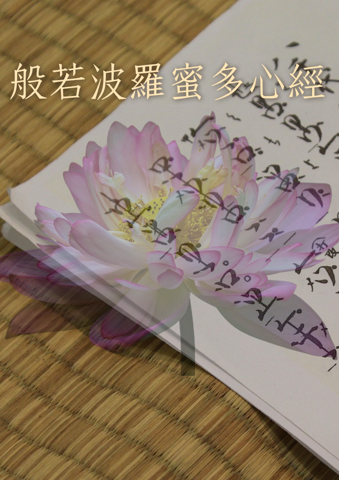
Background:
The most widely circulated Chinese version is attributed to the Tang Dynasty Tripitaka Master Xuanzang, which condenses the profound meaning of Prajna Emptiness into a very short text. Xuanzang's translation is a different version from Kumarajiva's translations, Sanskrit versions, Tibetan versions, and later commentaries. The 'Heart' in the title refers to the essential core and is not used in a general psychological sense.
Synopsis:
While practicing deep Prajna, Avalokiteshvara Bodhisattva perceived that all five aggregates are empty. He expounds to Shariputra levels of understanding such as the non-duality of form and emptiness, the emptiness of all phenomena, the twelve sense bases, and the twelve links of dependent origination, concluding with a mantra.
Literary Features:
The text deconstructs fixed concepts through negative enumeration and establishes a non-dualistic understanding with the phrase 'Form is emptiness, emptiness is form.' Vernacular annotations should label the systems of Buddhist terminology level by level to avoid misinterpreting 'emptiness' as 'nothing exists.'
Currently, no film or television adaptations are listed.
Main Version:
This version uses 'Heart Sutra' as the standard title, with the author, editor, or traditional attribution recorded as 'Translated by Xuanzang.' The main text consists of one volume. Common search titles include: Heart Sutra; Prajna Heart Sutra; Heart Sutra; Prajñāpāramitāhṛdaya.
Reading Suggestions:
The focus of the guide for the 'Heart Sutra' is the acquisition of the full text and vernacular annotations. When reading this Buddhist classic, the main text, later commentaries, modern vernacular translations, and selected textbook excerpts should be kept separate; if quoting, refer back to the complete text and specific chapters for verification.
The refined phrasing of Xuanzang's translation formed the most familiar face of the 'Heart Sutra' in East Asia and generated a large number of sectarian commentaries, calligraphy, and chanting versions. Modern punctuation, vernacular translation, and Sanskrit transcription belong to different editorial layers; readers should first confirm the translator and the textual system.
Miva: the next reading experience beyond audiobooks
Listen like an audiobook, then ask anything, anytime.
Start Miva's narrationMiva does not just narrate. It keeps explaining based on what you ask.