Background:
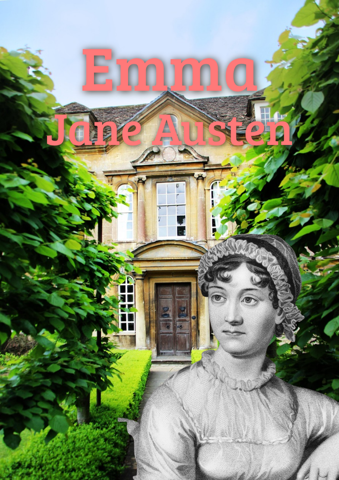
Jane Austen's Emma appeared in 1815 and concentrates its action in the English village of Highbury. Its heroine is wealthy, intelligent, and under no financial pressure to marry, so she directs her energy toward arranging other people's lives. Through her, the novel examines how property, rank, manners, and gossip govern social choice.
Story Summary:
Emma Woodhouse is convinced that she understands affection and resolves to secure a more elevated match for Harriet Smith. By repeatedly treating speculation as fact, she alters other people's expectations and must eventually reconsider both her judgment and her feelings.
Literary Form:
Austen's free indirect style stays close to Emma's consciousness while quietly preserving evidence that contradicts her. The comedy grows from implication, minute breaches of etiquette, and the shifting pleasure of seeing the truth either before or after the heroine does.
Director: Autumn de Wilde
Production country: United Kingdom
Principal cast: Anya Taylor-Joy, Johnny Flynn, Bill Nighy
Reason for inclusion: Its distinctive design and physical comedy make Regency hierarchy and embarrassment unusually visible.
Difference from the book: The film condenses visits and conversations and turns errors concealed in narrative viewpoint into expressions and gestures that can be seen on screen.
Main Edition:
The English novel has fifty-five chapters arranged in three volumes. General readers benefit from an unabridged edition with notes on rank, address, property, and inheritance. Research editions should identify their copy text, editorial principles, and significant variants from the first edition.
Reading Recommendation:
On a first reading, note who supplied each piece of information and how Emma interprets it rather than trying immediately to solve the pairings. A second reading reveals how often the decisive facts were present but hidden by confidence.
Cultural Significance:
Emma turns courtship fiction into an experiment in reading other minds and correcting one's own. Among Austen's mature novels, it brings social comedy, restricted viewpoint, and moral growth into especially close alignment, inviting continual adaptation to new periods and social settings.
Miva: the next reading experience beyond audiobooks
Listen like an audiobook, then ask anything, anytime.
Start Miva's narrationMiva does not just narrate. It keeps explaining based on what you ask.