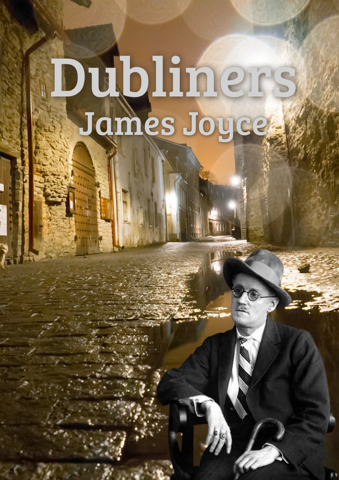
Background:
Joyce wrote most of Dubliners while young but faced years of publication difficulty before the collection appeared in 1914. Its Dublin is rendered through precise institutions, streets, speech, work, religion, family obligation, colonial pressure, and frustrated desire rather than through picturesque local color.
What kind of book is it?
Fifteen stories move broadly from childhood to public life, each focusing on a moment when habit or self-understanding becomes visible. The book is not one continuous novel, though echoes of names, places, songs, and social pressures create a cumulative portrait.
Literary style:
Joyce's controlled realism depends on omission, free-indirect style, repeated objects, awkward dialogue, and endings that expand rather than solve a situation. The often-used term epiphany is helpful only when tied to the exact formal turn within a story.
Director: John Huston
Production country: United Kingdom / Ireland / United States
Cast: Anjelica Huston, Donal McCann, Helena Carroll
Why it matters: A useful, identifiable screen version for comparison.
Difference from the book: adapts the final story only and expands gesture, music, and memory without representing the other fourteen stories.
Main editions and translations:
the selected digital edition contains all fifteen English stories in their established order. School selections frequently excerpt Araby or The Dead, while annotated editions add copyrighted scholarship; neither should be confused with this complete historical edition.
Reading recommendation:
A complete edition contains fifteen stories in order, from The Sisters to The Dead. Classroom anthologies often print only Araby or The Dead. Read the whole collection to follow the accumulation of names, places, songs, and social pressures across stories.
Cultural significance:
The collection forms an accessible entry to Joyce before A Portrait of the Artist as a Young Man and Ulysses, but its apparent simplicity is exacting. Its influence on the modern short story comes from showing how ordinary language, withheld action, and social detail can produce revelation without conventional closure.
Place in the author's writing:
The collection is Joyce's first sustained mapping of Dublin and the foundation for the urban detail, recurring names, and experiments with consciousness developed in A Portrait of the Artist as a Young Man and Ulysses. Its restraint matters within that career: formal innovation arises through omission, speech, objects, and endings before the later novels make their linguistic experimentation conspicuous.
Miva: the next reading experience beyond audiobooks
Listen like an audiobook, then ask anything, anytime.
Start Miva's narrationMiva does not just narrate. It keeps explaining based on what you ask.