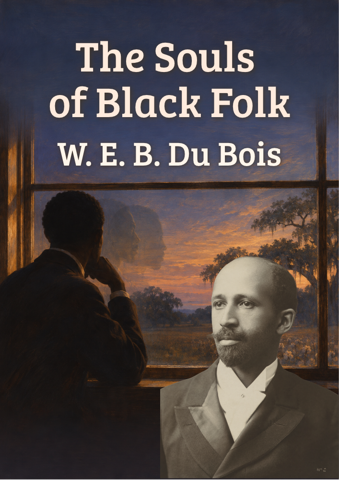
Du Bois asks to be read across forms. The book moves among essay, history, memoir, song, travel writing, and social analysis because no single register can account for Black life in the United States after Reconstruction. Its governing idea of double consciousness is not a detachable slogan; it gathers force as the chapters show education, labor, memory, and political exclusion pressing upon one another.
The prose can be prophetic, documentary, intimate, and argumentative in successive pages. That variety is the point.
No direct film or television adaptation was verified in the institutional and film-catalogue sources checked for this revision. Documentaries about W. E. B. Du Bois are not listed here as adaptations of this specific book.
The complete English text preserves the chapter epigraphs, musical notation, and formal variety that make the book more than a sequence of arguments. Annotated editions are especially useful for historical references to Reconstruction, Black education, and regional institutions. Read it slowly, with the chapter forms in view; a summary of its political concepts cannot replace the experience of how Du Bois builds them through scene, quotation, and address.
This is a foundational work in Du Bois's career because it makes scholarship answer to lived experience without surrendering intellectual rigor. That combination gives it a distinctive place in American letters and Black intellectual history.
Miva: the next reading experience beyond audiobooks
Listen like an audiobook, then ask anything, anytime.
Start Miva's narrationMiva does not just narrate. It keeps explaining based on what you ask.