Chinese Proofreading Correspondence: Formal Draft SHA-256 da393d1bf9d3c2f0
Background:
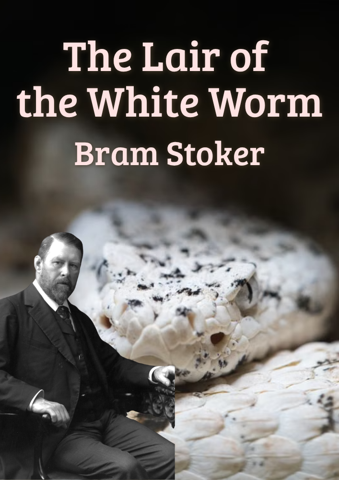
Bram Stoker published his final novel in 1911, weaving together English legend, geological speculation, hypnosis, inheritance, and anxieties regarding degeneration theory. The text contains offensive racial descriptions that require explicit criticism while preserving historical records.
Non-Spoiler Positioning:
An Australian heir arrives at an English estate and becomes embroiled in a conflict involving a neighboring mansion, a mysterious woman, and an ancient predatory force. Short chapters, letters, plans, and pseudo-scientific explanations drive a rapid and unstable Gothic narrative.
The 1988 British film directed by Ken Russell stars Amanda Donohoe, Hugh Grant, and Catherine Oxenberg. The film moves the story to the contemporary era, merging and transforming characters in a camp style, and significantly intensifies the visual and sexual metaphors of the White Worm; it cannot be used as a plot summary of the original work.
This batch adopts the complete 40-chapter text from 1911 as presented in the selected digital source 1188, rather than the heavily abridged 1925 version. When purchasing or citing other editions, the 40 chapters and the ending are the most direct checks for completeness.
The film gave this book cult horror fame, but a modern reading cannot merely appreciate the monster imagery; it must also address how the novel organizes fear through race, empire, gender, and degeneration theory.
Miva: the next reading experience beyond audiobooks
Listen like an audiobook, then ask anything, anytime.
Start Miva's narrationMiva does not just narrate. It keeps explaining based on what you ask.