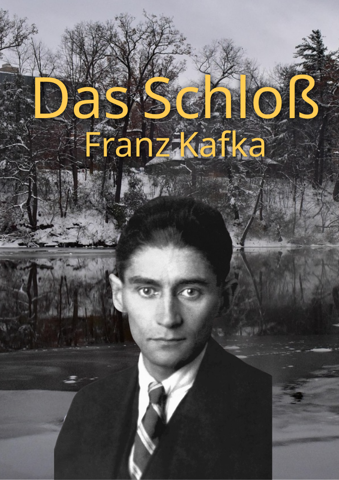
"Das Schloß" (The Castle) is an unfinished late novel by Franz Kafka. The protagonist, K., arrives in a village governed by a castle, yet finds himself eternally unable to reach the true center of power. This book transforms administrative language, waiting, misunderstanding, and identity anxiety into a spiritual labyrinth: individuals are not explicitly condemned, but slowly lose themselves within endless procedures.
Franz Kafka was born into a German-speaking Jewish family in Prague. Trained in law, he worked for many years in an insurance institution, writing only at night. His brief life spanned the end of the empire, the rise of modern bureaucracy, and urban isolation; "The Castle" pushes the suffocating feeling brought by desks, chains of command, and invisible authority into a nearly mythical form. Kafka's relationship with his work was direct: he did not merely observe the system, but wrote his own internal anxieties within the system into parables.
When read today, "The Castle" can be contrasted with the closed spaces in Haruki Murakami's novels, J. M. Coetzee's allegories of power, or even the corporate labyrinth of the series "Severance." It is suitable for readers who wish to understand "why modern people often feel swallowed by systems."
Notably, the horror of "The Castle" does not rely on violent events, but accumulates through daily details: hotel rooms, village whispers, the interference of assistants, messengers and telephones, and messages that seem formal yet remain forever incomplete. The harder K. tries to prove his qualifications, the more he exposes his inability to master the rules; the more he wants to enter the system, the more he is defined by the system in reverse. This narrative makes the reader feel firsthand that "effort does not necessarily bring closeness, and understanding does not necessarily bring a way out."
Placed within the curation of "Existential Anxiety, Basements, and the Absurd Life," "The Castle" represents institutional anxiety: humans placed before a vast structure, yet only able to contact its agents, rumors, and delays. Unlike traditional antagonist novels, the Castle itself hardly needs to do anything; the real oppression lies in the fact that everyone believes the Castle has the right to explain everything. Today, when facing platform rules, corporate processes, approval systems, and unappealable algorithmic judgments, we immediately recognize this Kafkaesque situation. This makes it belong not just to literary history, but to everyone who has ever been trapped by a process.
Miva: the next reading experience beyond audiobooks
Listen like an audiobook, then ask anything, anytime.
Start Miva's narrationMiva does not just narrate. It keeps explaining based on what you ask.