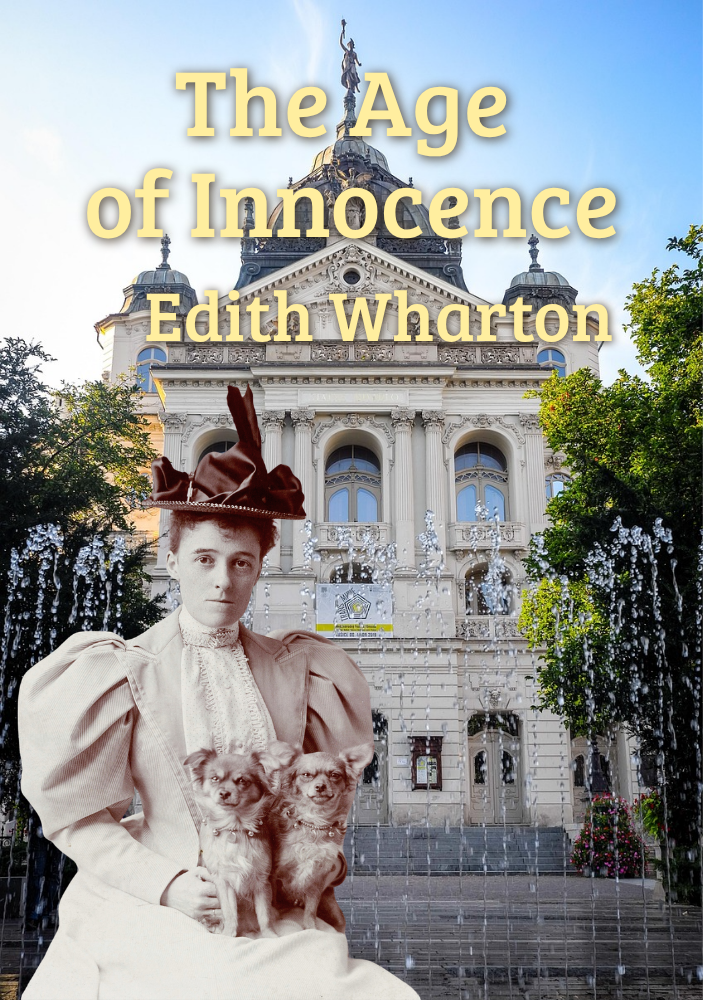
Work Background:
The Age of Innocence, by Edith Wharton, first appeared in 1920. Writing after she had left the world depicted, Wharton used memory and historical distance to examine the social system that formed her and that her career allowed her to judge. Wharton's historical irony made social custom itself a dramatic force and secured a major place for women's experience, interior conflict, and material culture in American fiction. Wharton's controlled irony makes gestures, rooms, clothes, visits, and omissions into a social language. The novel examines how old New York disciplines individual desire through manners rather than overt force. This context explains the work's choice of voice, structure, and genre, while helping readers recognize the literary setting and social institutions surrounding its first publication or performance. Readers may notice how public rules enter private judgment, how repeated images change meaning, and how form controls what can be known at each stage.
Story Overview:
Newland Archer's engagement to May Welland is unsettled by the return of Countess Ellen Olenska, whose wish to leave an unhappy marriage challenges old New York convention. Private desire is negotiated through visits, dinners, legal advice, and silences that preserve social order. This summary identifies only the central situation and direction without revealing the ending. As speakers, settings, scale, or social positions change, earlier events take on new meanings; the work's effect lies not only in its incidents but also in pacing, point of view, silence, and the distance between what characters understand and what readers can infer.
Director: Philip Moeller
Production country: United States
Principal cast: Irene Dunne, John Boles, Lionel Atwill, and Helen Westley
Difference from the book: The pre-Code film condenses Wharton's social detail and long temporal perspective into a compact romantic drama centered on the principal triangle.
Director: Martin Scorsese
Production country: United States
Principal cast: Daniel Day-Lewis, Michelle Pfeiffer, Winona Ryder, and Miriam Margolyes
Difference from the book: Voice-over and densely observed décor preserve Wharton's social commentary, while the film converts narrative irony and interior hesitation into framing, objects, and repeated visual rituals.
The selected full text is the verified digital edition numbered 541. Market titles include: The Age of Innocence; L'Âge de l'innocence; La edad de la inocencia; Zeit der Unschuld; L'età dell'innocenza; 純真年代. When choosing an edition, distinguish complete, abridged, annotated, modernized, and collected versions, and verify the translator, publisher, and year for each.
Wharton's historical irony made social custom itself a dramatic force and secured a major place for women's experience, interior conflict, and material culture in American fiction. Writing after she had left the world depicted, Wharton used memory and historical distance to examine the social system that formed her and that her career allowed her to judge. These qualities place the book at a specific point in the author's career and in the development of its genre. Its influence rests on recognizable questions of language, structure, history, and judgment rather than on a vague label of “classic.” Reading the full text beside another translation, stage production, or film reveals what later editors, translators, actors, and directors preserve, explain, compress, or rearrange, and brings out formal effects that summaries often conceal.
Reading another work from the same author's career also shows which concerns persist and which methods change. The book remains open to interpretation, disagreement, and rereading because readers can return to its actual language and arrangement instead of allowing later reputation to replace the experience of reading.
Miva: the next reading experience beyond audiobooks
Listen like an audiobook, then ask anything, anytime.
Start Miva's narrationMiva does not just narrate. It keeps explaining based on what you ask.