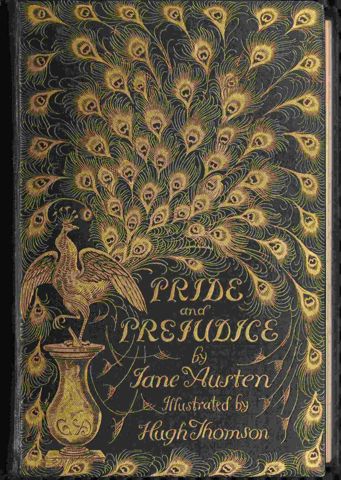
"Pride and Prejudice" by Jane Austen is a classic novel written in the early 19th century. The story delves into themes of love, social class, and individual agency, largely revolving around the life of Elizabeth Bennet, one of five sisters from a modest but genteel family navigating the complex social landscape of Regency England. The opening of the novel introduces the seemingly universal truth that a single man of wealth is a target for matchmaking mothers in the neighborhood. Mrs. Bennet is eager to marry off her daughters and is excited to hear about the arrival of Mr. Bingley, a wealthy young man who has taken up residence at Netherfield Park. Mr. Bennet's teasing yet indifferent nature contrasts sharply with Mrs. Bennet's anxious and businesslike demeanor as she plans to visit Mr. Bingley to create an opportunity for her daughters. Their witty exchanges set the tone for the story's exploration of family dynamics and social expectations, while also hinting at deeper character developments and the challenges Elizabeth will face regarding love and prejudice in her interactions with Mr. Darcy and the Bingley family.
Reading ease score: 69.2 (8th & 9th grade). Neither easy nor difficult to read.
Jane Austen’s Pride and Prejudice revolves around Elizabeth Bennet, a sharp-witted young woman navigating social expectations, family anxieties, and her own flawed judgments in nineteenth-century England. Her story unfolds alongside the complex personality of Mr. Fitzwilliam Darcy, a wealthy and seemingly haughty gentleman whose initial interactions with her breed deep mutual misunderstandings. Early in their acquaintance, Mr. Darcy incurs Elizabeth’s intense dislike. His proud demeanour at a local ball and his dismissive remarks regarding her appearance spark an immediate antipathy. This resentment deepens as Elizabeth encounters George Wickham, a charming officer who paints a dark picture of Darcy’s character. Wickham claims that Darcy cruelly deprived him of a valuable church living promised by Darcy's late father. Believing Wickham implicitly, Elizabeth holds fast to her prejudice against Darcy. Her feelings are further inflamed upon learning that Darcy intervened to separate his friend, Charles Bingley, from her elder sister, Jane, believing Jane's affection to be indifferent and viewing the Bennet family's lower social standing and vulgar relatives with disdain. Consequently, when Darcy unexpectedly proposes marriage to Elizabeth, declaring his passionate love despite his misgivings about her family, Elizabeth rejects him vehemently. She sharply criticizes his pride, his interference in Jane's happiness, and his alleged mistreatment of Wickham. In response, Darcy delivers a letter that forever alters Elizabeth's perspective. He explains his reasons for separating Bingley and Jane, which stemmed from a genuine belief that Jane did not love Bingley. More importantly, he reveals the truth about Wickham: far from being a victim, Wickham had squandered his financial support, attempted to seduce and elope with Darcy’s fifteen-year-old sister Georgiana for her fortune, and fabricated his grievances. Reading this, Elizabeth is forced to confront her own blindness, vanity, and unfair judgment. The turning point occurs when Elizabeth visits Darcy’s estate, Pemberley, with her aunt and uncle. Seeing his generous nature as a master, brother, and landlord, alongside his humbled and respectful conduct toward her, Elizabeth’s feelings gradually transform from contempt into esteem and genuine affection. Crisis strikes when news arrives that Elizabeth’s reckless younger sister, Lydia, has eloped with Wickham from Brighton. Such an scandal threatens to ruin the entire Bennet family's reputation forever. Wickham has no intention of marrying the penniless Lydia, but Darcy secretly intervenes. Driven by his enduring love for Elizabeth and a desire to remedy his past silence regarding Wickham's true character, Darcy tracks the couple down in London. He pays off Wickham’s heavy debts and purchases him a military commission, effectively forcing Wickham to marry Lydia and rescuing the family from disgrace. When Elizabeth discovers Darcy’s anonymous act of benevolence, her last remaining doubts vanish. Shortly after, Bingley returns to Netherfield, reunites with Jane, and asks for her hand in marriage. Encouraged by Elizabeth's refusal to promise Lady Catherine de Bourgh that she would never accept Darcy, Darcy returns to express his lingering hopes. Recognizing how both have grown, Elizabeth overcoming her initial prejudice and Darcy relinquishing his aristocratic pride, they become engaged. In the end, Wickham and Lydia live a frivolous, financially unstable life, sustained only by occasional assistance, while Darcy and Elizabeth enjoy a harmonious marriage at Pemberley, rooted in mutual respect, deep love, and shared laughter.
In vain have I struggled. It will not do. My feelings will not be repressed. You must allow me to tell you how ardently I admire and love you.Pride and Prejudice Chapter 34. This unexpected declaration exposes Darcy's intense emotional vulnerability while highlighting his internal conflict over social disparity, forming one of the central dramatic turning points of the novel.
I do assure you, sir, that I have no pretensions whatever to that kind of elegance which consists in tormenting a respectable man. I would rather be paid the compliment of being believed sincere. I thank you again and again for the honour you have done me in your proposals, but to accept them is absolutely impossible. My feelings in every respect forbid it. Can I speak plainer? Do not consider me now as an elegant female intending to plague you, but as a rational creature speaking the truth from her heart.Pride and Prejudice Chapter 19. Elizabeth explicitly demands recognition as a rational individual rather than an ornamental object performing social games, serving as a powerful assertion of female agency and moral integrity.
She is tolerable: but not handsome enough to tempt me; and I am in no humour at present to give consequence to young ladies who are slighted by other men. You had better return to your partner and enjoy her smiles, for you are wasting your time with me.Pride and Prejudice Chapter 3. This iconic public snub instantly establishes Darcy's arrogant pride and provokes Elizabeth's lasting prejudice, launching the primary dynamic and conflict of the entire narrative.
Without thinking highly either of men or of matrimony, marriage had always been her object: it was the only honourable provision for well-educated young women of small fortune, and, however uncertain of giving happiness, must be their pleasantest preservative from want.Pride and Prejudice Chapter 22. This unsentimental insight candidly lays bare the harsh economic realities and limited social choices governing middle-class women in Regency England.
The reading difficulty for Jane Austen's masterpiece is moderate, scoring in an accessible range for average adult readers. While the language reflects nineteenth century speech patterns, complex formal syntax, and vocabulary unique to Regency society, the narrative flow is brisk and engaging. Austen relies heavily on lively dialogue, witty banter, and clear character interactions rather than overly long descriptions. Once a reader gets used to the cadence of the period prose, the story reveals itself as an approachable and highly entertaining drama about human behavior.
Austen's novel remains a cornerstone of English literature because its sharp observations on human nature, love, and vanity remain entirely relevant today. Beyond its historical setting, the work serves as a brilliant satire of social posturing and economic anxiety. The dynamic between Elizabeth and Darcy set the modern archetype for romantic fiction, showcasing two flawed individuals who must grow personally before they can find happiness together. Austen's mastery of irony, realistic dialogue, and psychologically grounded character development ensures the story resonates across generations.
The narrative demonstrates that women of the genteel classes had limited options for financial security outside of marriage. Because the Bennet estate is entailed to a male heir, the sisters face potential poverty after their father dies. Austen highlights this social structure through various choices, such as Charlotte Lucas marrying for stability rather than love. Through these plotlines, the book realistically illustrates how class expectations and gender constraints influenced personal decisions during the early nineteenth century.
Irony is central to the novel's structure, starting from its famous opening sentence about wealthy single men. Austen uses light satire to critique the absurdities of her characters, particularly Mrs. Bennet's frantic matchmaking and Mr. Collins's sycophantic devotion to Lady Catherine. The humor is often delivered through Mr. Bennet's dry commentary and Elizabeth's sharp observations. This comedic tone balances the serious social critiques of class, income, and reputation woven into the narrative.
The plot explores how initial judgments can be dangerously misleading. Elizabeth forms a quick, negative opinion of Darcy based on a single dismissive remark at a assembly, which makes her vulnerable to Wickham's lies. Similarly, Darcy lets his pride blind him to Elizabeth's worth because of her lower social standing and improper relatives. Both characters must systematically dismantle their initial impressions and acknowledge their personal failings before they can understand each other's true character.
Everything the story builds toward resolves in a series of powerful encounters where long held misjudgments give way to complete clarity. The final chapters deliver the ultimate resolution between aristocratic pride and hardened prejudice, bringing separate journeys of personal growth into absolute alignment. Who steps forward to undo past mistakes, how hidden sacrifices come to light, and which bonds survive the strict judgment of high society are the exact moments that make reaching the conclusion so satisfying. Experience these transformative final pages for yourself.
Miva: the next reading experience beyond audiobooks
Listen like an audiobook, then ask anything, anytime.
Start Miva's narrationMiva does not just narrate. It keeps explaining based on what you ask.