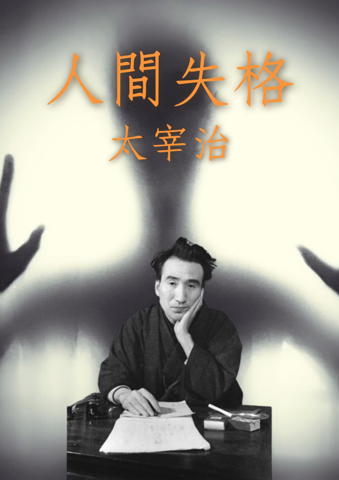
Background: Published in 1948, No Longer Human begins with a narrator discovering three photographs and three notebooks belonging to Oba Yozo. It depicts Yozo's gradual loss of connection with the human world from childhood to adulthood. In post-war Japan, values were restructured and the old family order collapsed, yet new life failed to provide true stability. Against this backdrop, Yozo feels unable to understand or be understood by others, resorting to clowning, people-pleasing, and escapism to maintain a facade of life.
Literary Features: Osamu Dazai depicts "shame" with piercing sharpness. Yozo is not simply an antisocial person; he is actually quite observant and knows how to use humor to put others at ease. However, because he is so adept at performing, he becomes increasingly unsure of his true self. The novel takes the form of notebooks, reading like a confession or a medical case file. Readers sympathize with Yozo's fear while noticing his constant beautification, evasion, or justification within the narrative. This complexity makes the work more than just a decadent monologue, but a profound novel about self-loathing and the performance persona.
Story Introduction: No Longer Human still resonates with young readers today because it voices the hidden fear of "am I unfit for a normal life?" In the social media age, everyone is better at presenting themselves, yet more prone to doubting if they are just acting like a normal person. This book shows that living behind a mask for a long time may eventually lead to uncertainty about whether a stable face even exists beneath it. From childhood, Yozo felt he did not understand humans, so he learned to use clowning to reassure those around him. He constantly seeks refuge in family, school, friendships, relationships with women, and urban debauchery, yet finds himself increasingly unable to believe he can be truly accepted. The work presents his descent through three notebooks: childhood fear, youthful masquerade, and adult dependency and collapse are all interconnected. Yozo does not lose his "humanity" suddenly; he slowly loses the ability to function normally in the world through cycles of pleasing others, escaping, and self-loathing. This story is accessible without profound literary knowledge; by following the character's choices, hesitations, and silences, one can feel the human condition slowly pushed before their eyes.
Encyclopedia
Author's Life: Osamu Dazai (1909-1948) was a representative writer of Showa literature whose works often combined autobiographical material, satire, self-destructive impulses, and keen psychological analysis.
Relationship between Author and Work: No Longer Human is often regarded as the crystallization of Dazai's life experience and literary persona in his final years, though it is not a simple diary but a carefully designed fictional narrative.
Modern Analogy: Like someone who permanently plays a "normal person" online, handing over all drafts, deleted messages, and records of breakdowns at once, allowing readers to see the darkness behind the mask."
The story opens with a narrator describing three haunting photographs of a man named Oba Yozo. In the first, as a child, he wears an unnaturally grotesque, monkey-like smile. In the second, as a student, he possesses striking beauty yet looks completely devoid of human warmth or life. In the third, an aging, featureless man sits in a dilapidated room, looking so utterly expressionless that his image fades from memory the moment one looks away. These photographs belong to three journals that recount Yozo’s life. From early childhood, Yozo feels entirely alienated from the human race. Unable to comprehend the motives, feelings, or social conventions of the people around him, he lives in constant terror of being exposed as an outsider. To survive and conceal his profound anxiety, he adopts a mask of clowning, playing the fool to make others laugh and keep them at a distance. As Yozo matures and attends high school in Tokyo, his delicate facade begins to crumble. Although he successfully fools most people, a sickly classmate named Takeichi sees through his deliberate buffoonery during a gymnastics class. Terrified that his true nature will be exposed, Yozo befriends Takeichi to keep him silent. Through an older friend named Horiki, Yozo is introduced to alcohol, tobacco, prostitutes, and underground political movements. He finds comfort in these vices and illicit circles because they offer a temporary escape from his suffocating fear of society. Unable to handle the demands of everyday life and crushed by financial hardship, Yozo slips deeper into self-destruction. He enters into a tragic double suicide attempt with a lonely cafe waitress named Tsuneko. Tsuneko drowns in the sea at Kamakura, but Yozo survives. He is arrested as an accessory to her death, facing overwhelming guilt, public shame, and the cold judgment of the legal system. Though the charges are eventually dropped, he is expelled from school and cast off by his family. Yozo continues to drift through life, supported by various women who are drawn to his gentle, tragic nature. He lives as a dependent with a single mother named Shizuko, drawing cartoons to earn a meager living, but his guilt forces him to run away. Later, he meets Yoshiko, an innocent and trusting young woman who believes in him. They marry, and for a brief moment, Yozo experiences a quiet, sober, and genuinely happy life. However, this peace is shattered when Yoshiko is assaulted by an acquaintance. Witnessing her unblemished trust betrayed breaks Yozo completely, driving him to attempt suicide again by swallowing pills. Surviving once more, Yozo turns to alcohol and eventually becomes heavily addicted to morphine. As his debt and health spiral out of control, his friend Horiki and his caretaker offer to help him. Instead of bringing him home, they betray his trust and commit him to a mental asylum. Behind the locked doors of the institution, surrounded by psychiatric patients, Yozo realizes that society has branded him a madman. He reaches his ultimate realization: he has been completely disqualified as a human being. Eventually, his family releases him and sends him to live in an isolated house in the countryside under the care of an old maid. There, isolated from the world and aging prematurely at twenty-seven, Yozo feels neither happiness nor misery. Looking back on his ruined life, he arrives at a single, quiet truth: in the world of human beings, everything merely passes.
Mine has been a life of much shame.Original: 恥の多い生涯を送って来ました。No Longer Human 第一の手記. This famous opening line immediately establishes the protagonist's profound alienation and sets the central tragic tone for the entire narrative.
Disqualified as a human being.Original: 人間、失格。No Longer Human 第三の手記. It serves as the ultimate thematic climax of the novel, where Yozo completely surrenders his identity and accepts his failure to belong to the human race.
I ask of God: Is non-resistance a sin?Original: 神に問う。無抵抗は罪なりや?No Longer Human 第三の手記. It captures the central existential dilemma of the novel, questioning whether his tragic downfall was caused by his own flaws or by his inability to resist a cruel society.
While the psychological weight of the novel is heavy, the prose itself is extraordinarily direct, accessible, and fluid. Osamu Dazai avoids dense academic language or overly complex structural gimmicks, opting instead for a first-person confessional format that reads like a intimate personal diary or case file. The difficulty lies not in comprehending the plot or vocabulary, but in confronting the intense, unvarnished portrayal of self-loathing, severe social anxiety, and existential isolation. Readers who have ever felt out of place or forced to perform a persona to fit into society will find the emotional trajectory instantly recognizable and deeply moving.
Published in 1948 during Japan's tumultuous post-war period of social displacement, the novel transcends its immediate historical moment by capturing a universal human experience: the fear of social inadequacy and the terrifying burden of wearing a mask. Dazai's brilliant execution of the "I-Novel" genre transforms a intensely personal confession into a piercing mirror for the modern age. Its uncanny ability to articulate the quiet, hidden dread of pretending to be "normal" ensures its continued resonance across generations, cultures, and social media eras.
The work is classified as a semi-autobiographical novel, blending Dazai's lived experiences with carefully constructed fiction. While the protagonist Oba Yozo shares many biographical parallels with Dazai, including a wealthy background in northern Japan, suicide attempts, addiction struggles, and bohemian lifestyle, it is a literary work rather than a literal memoir. Dazai utilizes the confessional diary framework to explore themes of shame, alienation, and performing personas with heightened dramatic focus.
"Clowning" (道化) represents Yozo's primary defense mechanism against a world he finds utterly incomprehensible and terrifying. Believing himself fundamentally flawed and incapable of understanding human motives, he acts as a foolish jester to make people laugh, diffuse potential hostility, and keep humanity at a safe distance. Instead of integrating him into society, however, this lifelong performance traps him in a state of severe self-alienation, making him unable to reveal his genuine self or build authentic connections.
The original Japanese title, Ningen Shikkaku (人間失格), literally translates to "Disqualified as a Human Being." The title signifies the protagonist's ultimate realization that he has failed to meet the basic standards required to function as a human among others. Rather than viewing his tragic path as a simple series of external misfortunes, Yozo internalizes his struggles as a fundamental loss of his human status, viewing himself as a living corpse severed from the human community.
What awaits at the conclusion of Yozo's final diary is a sudden transition into total, heavy stillness rather than a dramatic outburst. After a lifetime spent performing behind masks and fleeing through self-destructive habits, the narrative strips away every remaining defense, leaving the protagonist in a state where social expectations completely cease to operate. The final sequence brings the reader to a quiet, isolated threshold where human judgment dissolves, offering a haunting payoff that settles the entire trajectory of his life.
Miva: the next reading experience beyond audiobooks
Listen like an audiobook, then ask anything, anytime.
Start Miva's narrationMiva does not just narrate. It keeps explaining based on what you ask.