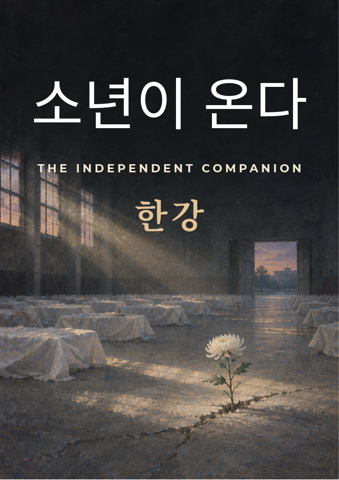
Gwangju, May 1980: Fifteen-year-old Dong-ho remains at the Provincial Office to manage the bodies of the victims. The story does not end with Dong-ho's death. Memories of violence migrate to friends, survivors, editors, mothers, and future writers, questioning how history remains etched into the bodies of those who survived.
This guide organizes the narrators and eras of the seven chapters, as well as the relationships centered around Dong-ho. Since it covers corpses, torture, state violence, and trauma, readers can pause their reading as needed. This guide helps readers examine what each voice testifies to and what ultimately remains unsaid, rather than consuming the tragedy as a provocative plot. This product is an independent chapter-by-chapter summary guide for review and reading support, not the original text.
Winner of the 2014 Manhae Literary Prize, Winner of the 2017 Malaparte Prize, Longlisted for the 2018 International Dublin Literary Award.
From the moment Dong-ho wipes the faces of the dead at the Provincial Office, this novel refuses to leave Gwangju in the past tense. This is because violence continues to reside in the bodies, workplaces, families, and language of those who survived. Multiple voices gather around one person's death, asking whose responsibility it is to remember.
It distinguishes the eras and narrators of the seven chapters and connects the relationships between Dong-ho, Jeong-dae, Eun-sook, Jin-su, Seon-ju, and the Mother. It identifies who the second-person 'you' refers to in each chapter and how experiences of censorship and detention return to haunt later life. As it deals with corpses, torture, and self-harm, readers can navigate the content according to their own well-being.
The recurring second person is a form of mourning that calls back the dead and a way of holding the living accountable. Identifying who 'you' is directed at in each chapter clarifies the shifts in point of view.
Detention, torture, censorship, and shame continue to disrupt work, sleep, and intimate relationships decades later. The guide follows the timeline of aftereffects, ensuring survival is not mistaken for complete recovery.
Each character offers fragments they can bear rather than the whole truth. It examines how silence, repetition, and discrepancies in memory reveal the depth of historical violence rather than negating one another.
Readers interested in the Gwangju Uprising, testimonial literature, collective trauma, and forms of mourning. It helps readers understand why Han Kang chose a succession of voices over a single protagonist, without summarizing pain into sensational events.
Edition Note: This material is an independent chapter guide and summary, not the full original work. It is intended for use alongside the original text for review and reading support.
Miva: the next reading experience beyond audiobooks
Listen like an audiobook, then ask anything, anytime.
Start Miva's narrationMiva does not just narrate. It keeps explaining based on what you ask.