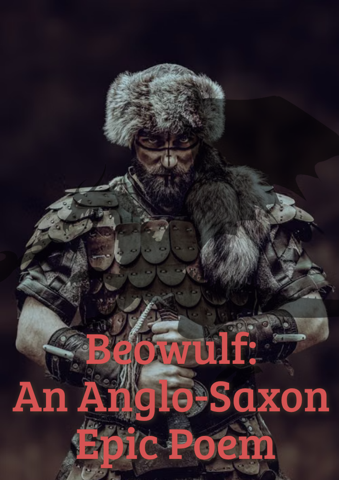
Background:
Beowulf is one of the most important surviving works of Old English heroic poetry. Its sole medieval witness is preserved in the Nowell Codex, while its stories look across the North Sea to the Danes and Geats. Pagan heroic customs and a Christian view of history coexist throughout the poem. This edition presents J. Lesslie Hall's 1892 metrical translation, whose deliberately archaic diction seeks to suggest the gravity and cadence of the original.
Story Summary:
The young warrior Beowulf sails to aid a Danish court terrorized by Grendel. Many years later, as king of the Geats, he must confront a dragon threatening his own people. The poem is not merely a sequence of monster fights: it asks what strength, reputation, loyalty, and mortality cost both a hero and the community that depends on him.
Literary Form:
The Old English poem advances through stress, alliteration, compound imagery, formal speeches, gift-giving, feuds, and elegiac recollection. Hall's English is best approached as verse meant to be heard. Genealogies and stories of earlier wars are not digressions; they surround each victory with memories of obligations that violence cannot finally settle.
Director: Robert Zemeckis
Production countries: United States and United Kingdom
Principal cast: Ray Winstone, Anthony Hopkins, Angelina Jolie
Reason for inclusion: This performance-capture feature is among the most widely circulated modern screen versions of the poem.
Difference from the book: The film makes Grendel's mother and the dragon consequences of Beowulf's personal deception; the poem contains no such causal plot.
Main Edition:
Hall emphasizes verse form and an antique register. It remains useful for studying nineteenth-century reception, but some vocabulary now feels remote. Readers seeking greater immediacy may compare modern translations such as those by Seamus Heaney or Maria Dahvana Headley. Work that depends on exact wording should use an edition with the Old English text, line numbers, textual notes, and a clear manuscript basis.
Reading Recommendation:
On a first reading, follow the three central confrontations. Then return to the inserted family histories, songs, vows, and predictions to see how heroic action is enclosed by political memory.
Cultural Significance:
The poet's name is unknown, but the poem preserves Old English narrative art at its most ambitious. It is a central source for the study of early English language, kingship, feud, and heroic ethics, and its monsters, dragon-slayer, and doomed kingdom have profoundly shaped modern fantasy.
Miva: the next reading experience beyond audiobooks
Listen like an audiobook, then ask anything, anytime.
Start Miva's narrationMiva does not just narrate. It keeps explaining based on what you ask.