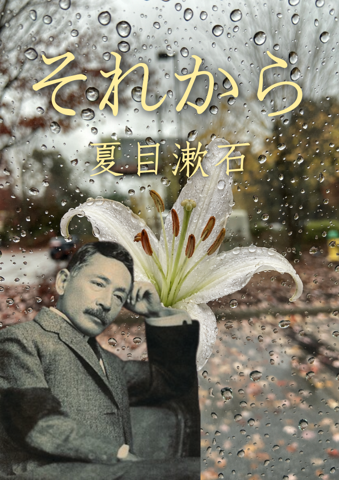
Background: And Then (Sorekara) depicts the spiritual life and romantic choices of Daisuke Nagai, a young man in Tokyo. Highly educated and from a wealthy family, Daisuke refuses to immerse himself in the industrial world like his father and brother. He lives a life of taste, sensitivity, and near-seclusion until the reappearance of his old friend Hiraoka and Hiraoka's wife, Michiyo, brings his long-avoided problems to the surface: Will he continue to rely on family arrangements, or will he admit he truly loves his friend's wife? Written in the late Meiji period, the novel captures the era when Japan's urban classes, capitalist order, and individualism were rapidly taking shape.
Literary Features: The novel begins with Daisuke waking from a dream, hearing his own heartbeat and seeing a camellia flower fallen by his pillow, immediately drawing the reader into a sensitive, elegant, yet uneasy inner world. Soseki is skilled at hiding intense conflict within indoor conversations, bouquets of flowers, the sound of rain, and moments of silence. Daisuke is not a simple romantic hero; he loathes vulgar success while relying on family money to maintain his freedom; he pursues true feeling but cannot deny that this truth will destroy friendship and marriage. This paradox makes the work feel remarkably modern.
Synopsis: And Then is highly relevant to today's readers facing career choices, family expectations, and emotional dilemmas. It doesn't just ask the simple question of "should one bravely pursue love," but rather: when we say we want to be true to ourselves, are we prepared to pay the price? The title "And Then" (or "Afterward") is a heavy term, because real life is often not hardest before a decision is made, but when the trials begin after the decision. Daisuke's life is superficially refined and leisurely, but in reality, it is suspended in mid-air. His relationship with his father and brother reveals the family's control over marriage and career, making him realize his freedom is not entirely his own. The reappearance of Michiyo forces an end to his posture as a mere observer of life. The work describes step-by-step Daisuke's process from self-analysis, repression, and testing to the admission of his feelings. When he finally chooses Michiyo, the story does not end in a romantic victory but shows the reader that his path of retreat from family and society is about to be cut off. This story requires no deep literary knowledge to enter; by following the character's choices, hesitations, and silences, one can feel the work slowly pushing a human predicament before one's eyes.
Works Encyclopedia
Author's Life: Natsume Soseki is a representative writer of modern Japanese literature. He taught English at a university before resigning to become a professional novelist. He was familiar with Western thought and understood the conflicts that arise when individualism enters Japanese family and society.
Relationship between Author and Work: And Then is the second part of Soseki's early trilogy, following the youthful confusion of Sanshiro and leading to the ethical consequences in The Gate (Mon). Daisuke embodies Soseki's observations on the "Koto Yumin" (higher-educated idlers) and the spiritual idling of the intellectual class.
Modern Analogy: Like an urbanite with a degree, taste, and a safety net, suddenly discovering that the life they truly want is precisely the life that will cause them to lose their protective umbrella."
Miva: the next reading experience beyond audiobooks
Listen like an audiobook, then ask anything, anytime.
Start Miva's narrationMiva does not just narrate. It keeps explaining based on what you ask.