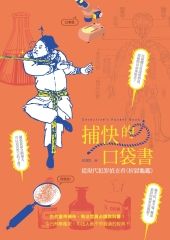
☆ Zheyu Guijian (Magic Mirror for Solving Cases) by Zheng Ke of the Southern Song Dynasty: A complete compendium of crime detection and prevention knowledge.
☆ Verifying ancient criminal investigation practices through modern criminal investigation theories.
You may know the Great Song Forensic Commissioner Song Ci, but do you know Zheng Ke? Forget 'The Washing Away of Wrongs' (Xi Yuan Ji Lu) for a moment—have you heard of 'Zheyu Guijian'? Can whispering in a corpse's ear really reveal the details of a murder? Can hosting a lavish banquet for every butcher in town help track down a murder weapon? If someone remains calm and collected, does it truly mean they aren't lying?
The author of the 'Ancient and Modern Forensic Science Comparison' series returns with another classic revival following 'Who Let the Dead Speak?' and 'Thinking of Escaping? Not So Easy!'.
Associate Professor Tsou Chun-chi of the General Education Center at Central Police University combines his expertise in Chinese characters, folk beliefs, and interdisciplinary Sinology to analyze representative cases from Zheyu Guijian. By cross-referencing ancient practices with modern police academic theories, he constructs a comprehensive system of Zheng Ke's criminal investigation (legal) theory and practice. The book is structured into sections covering: Zheng Ke’s motivations and cultural background, a brief history of China's criminal investigation system, the qualifications required for judicial personnel, forensic technologies found in Zheyu Guijian, and methods and strategies for criminal interrogation.
This book not only opens up diverse research perspectives in 'Police History' but has also received unanimous professional acclaim from academic and police circles. It is a must-read for anyone interested in forensic science and the evolution of criminal investigation!
Miva: the next reading experience beyond audiobooks
Listen like an audiobook, then ask anything, anytime.
Start Miva's narrationMiva does not just narrate. It keeps explaining based on what you ask.