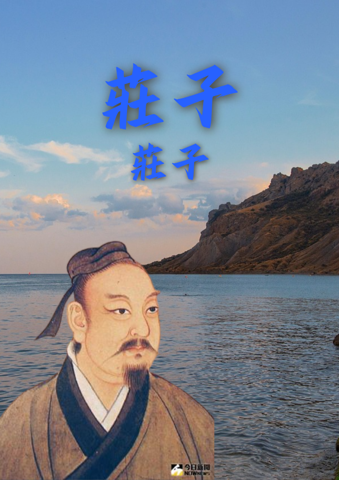
Guide to the Work
Background: The Zhuangzi emerged during the Warring States period, an era of intense intellectual competition where various schools of thought proposed solutions for governance, knowledge, and life. Diverging from the more proactive social involvement of Confucianism, Mohism, and Legalism, Zhuangzi used concepts like "carefree wandering" (Xiao Yao), the "equality of all things" (Qi Wu), "nourishing life," and "non-dependence" to loosen human attachments to fame, profit, right and wrong, and social identity. Although born of chaotic times, the work does not respond with direct political solutions but uses imagination to rearrange the relationship between humans and the world. This background is not just a chronological note; it determines how the work understands power, desire, and individual choice. By grasping this historical context, readers can see the deeper cultural anxieties and value conflicts behind the narrative.
Introduction: The Zhuangzi is composed of fables, dialogues, and philosophical fragments, including famous chapters such as the Kun-Peng's flight, Zhuang Zhou dreaming of a butterfly, Cook Ding carving the ox, and the debate on the joy of fish. It lacks a single plot, offering instead a series of intellectual scenes: people and things transform into one another, common sense is questioned, and authority is satirized. Readers follow the text as it detaches from fixed perspectives, gradually seeing that size, status, life and death, and right and wrong may only be relative ways of viewing the world. When reading, one can view the plots as tests: how characters face misjudgment, temptation, loss, or desire is often more important than the events themselves. The progression of the stories ensures that the classic is no longer distant from modern experience but returns to the reader's own judgment.
Literary Features: The Zhuangzi possesses immense literary power, making clever use of exaggerated imagination, mythological scales, sophistical dialogues, and humorous irony. Unlike typical philosophical texts that pursue clear definitions, it allows concepts to flow through stories, forcing readers to personally experience shifts in perspective. The writing often uses incredible imagery to open up space for thought, turning philosophy into a spiritual journey through reading. This free-form style deeply influenced later poetry, aesthetics, and metaphysics. Its beauty lies not only in plot or language but in how it transforms abstract thought into tangible scenes and character actions. The twists, contrasts, symbols, and shifts in tone provide layers that warrant re-reading, moving far beyond genre entertainment.
Encyclopedia
Author's Life: Zhuangzi, named Zhou, was a native of Meng in the state of Song during the Warring States period. Biographical data is scarce. Legend says he served as a minor official in the Lacquer Garden and refused political office, valuing spiritual freedom and the Way of Nature. The current version of the Zhuangzi is divided into Inner, Outer, and Miscellaneous chapters; it is generally believed that the Inner Chapters are closer to Zhuangzi's own thoughts, while others contain developments by his followers. This composite nature gives the Zhuangzi both a personal style and a collective extension of the Taoist tradition. Understanding the author's life helps identify recurring themes: power, faith, identity, displacement, frustration, or the obsession with beauty. These life experiences are not the sole interpretation of the work, but they provide a solid entry point for reading.
Relationship Between Author and Work: The Zhuangzi best represents Zhuang Zhou's spiritual posture: not rushing to establish authority, but dismantling it; not overwhelming readers with fixed answers, but teaching them to move their perspective. The author's image is highly consistent with the language of the work—both present a loosening of boundaries regarding status, prejudice, and life and death. Even if the Outer and Miscellaneous chapters contain contributions from followers, they continue Zhuangzi’s style of free, humorous, and counter-intuitive thinking. Therefore, while reading this book, one can observe how the author's intellectual concerns are transformed into characters, plots, and narrative rhythms. The work does not simply state the author's position; it allows these positions to be tested within stories, which is why this classic can conduct dialogues across eras."
The Zuangzi is not a single continuous narrative with a linear plot or a definitive ending, but rather a collection of parables, allegorical tales (寓言), and philosophical dialogues structured across three main sections: the Inner Chapters (內篇), Outer Chapters (外篇), and Miscellaneous Chapters (雜篇). Produced during the tumultuous Warring States period, the work employs vibrant imagery, paradoxical arguments, and absurd humor to dismantle conventional human knowledge, societal norms, and moral absolute values. The text begins with its iconic imagery of scale and perspective: a massive fish named Kun transforms into the giant bird Peng, whose wings span the clouds as it ascends ninety thousand leagues into the sky. Small creatures like sparrows and cicadas mock the giant bird's immense journey, unable to comprehend a reality beyond their limited trees. Through this metaphor of "逍遙遊" (Free and Easy Wandering), the work establishes its primary thesis: human suffering and intellectual paralysis stem from rigid preconceptions and narrow perspectives. As the work unfolds, it presents a series of eccentric characters and striking scenarios designed to challenge everyday assumptions. In the story of "庖丁解牛" (Cook Ding Butchering an Ox), a simple butcher navigates his blade effortlessly through the complex joints of an ox without dulling the metal. He succeeds not through brute force or intellectual analysis, but by following the natural spaces and organic structures of the anatomy, a fundamental metaphor for navigating life's challenges by conforming to the "Dao" (the natural flow of the universe). Central to the narrative is the critique of human distinction and moral posturing. The text contrasts traditional Confucian and Mohist debates over righteousness with a broader perspective where all opposites, big and small, life and death, right and wrong, are fundamentally unified ("齊物論"). This radical relativism culminates in the famous tale of the Butterfly Dream: Zhuangzi dreams he is a butterfly fluttering about joyfully, completely unaware of being Zhuangzi. Upon waking, he finds himself solidly Zhuangzi again, yet he wonders whether he is a man who dreamed he was a butterfly, or a butterfly now dreaming he is a man. This blurring of boundaries illustrates "物化" (the transformation of things), suggesting that human identity is fluid rather than absolute. The framework also redefines human mortality. When Zhuangzi’s wife dies, his friend Huizi finds him singing and drumming on a basin. Zhuangzi explains that grief is unnecessary: his wife existed first without form or substance, transformed into life, and has now merely returned to the giant room of nature, undergoing a transition as natural as the passing of the four seasons. Similarly, in a dialogue with a dry skull by the roadside, the skull reveals that the dead experience no burdens or anxieties of rulers and servants, enjoying a peace greater than that of a king. Because The Zhuangzi is an anthology of philosophical thought rather than a novel, it has no narrative climax or traditional resolution. Its concluding section, the "Tian Xia" (天下) chapter, acts as an overview of pre-Qin intellectual history. It surveys various philosophical schools of the era, critiquing the rigid discipline of Mohism, the logical paradoxes of Hui Shi, and the political theories of others, before situating Zhuangzi’s own philosophy as a return to ultimate naturalness and total spiritual release. Rather than concluding with a final event, the work closes by leaving its reader in an ongoing state of open-ended transformation, inviting the mind to transcend rigid worldly boundaries and wander freely with the universe.
Penumbra asked Shadow, "A moment ago you were moving, and now you stand still; a moment ago you were sitting, and now you stand up. Why have you no independent resolve?" Shadow replied, "Do I depend on something else to be as I am? Does that on which I depend also depend on something else to be as it is? Do I depend on the scales of a snake or the wings of a cicada? How can I know why I am so? How can I know why I am not so?Original: 罔兩問景曰:「曩子行,今子止;曩子坐,今子起,何其无特操與?」景曰:「吾有待而然者邪?吾所待又有待而然者邪?吾待蛇蚹蜩翼邪?惡識所以然?惡識所以不然?」Zhuangzi. This passage vividly illustrates the Daoist concept of conditional existence and causation, challenging reader assumptions about autonomy and control through an intriguing philosophical dialogue.
Once, Zhuang Zhou dreamed he was a butterfly, a butterfly flitting and fluttering about, happy with himself and doing as he pleased, unaware of Zhou. Suddenly he awoke, and there he was, unmistakably Zhou. But he did not know whether Zhou was dreaming he was a butterfly, or a butterfly dreaming he was Zhou. Between Zhou and a butterfly there must be some distinction. This is called the Transformation of Things.Original: 昔者莊周夢爲胡蝶,栩栩然胡蝶也,自喻適志與,不知周也。俄然覺,則蘧蘧然周也。不知周之夢爲胡蝶與?胡蝶之夢爲周與?周與胡蝶,則必有分矣,此之謂物化。Zhuangzi Discussion on Making All Things Equal. Known as the Butterfly Dream, this is one of the most famous parables in world philosophy, elegantly destabilizing the boundary between self, perception, and ultimate reality.
If gradually my left arm should be transformed into a cock, I would use it to announce the time of night; if gradually my right arm should be transformed into a crossbow pellet, I would use it to seek out roasted owl; if gradually my buttocks should be transformed into wheels and my spirit into a horse, I would mount them, and what other carriage would I ever need? Furthermore, gain comes when it is time, and loss comes with the natural flow. Content with the time and dwelling in the natural flow, neither sorrow nor joy can enter. This is what the ancients called being untied from hanging upside down.Original: 浸假而化予之左臂以爲雞,予因以求時夜;浸假而化予之右臂以爲彈,予因以求鴞炙;浸假而化予之尻以爲輪,以神爲馬,予因而乘之,豈更駕哉?且夫得者時也,失者順也,安時而處順,哀樂不能入也,此古之所謂縣解也。Zhuangzi Great Master. It presents a radical embrace of change and bodily transformation, demonstrating how equanimity toward life and death liberates one from psychological suffering.
While the text originates from ancient China and relies on classical phrasing, it remains immensely accessible due to its narrative style. Unlike dense legal or logical treatises, the vast majority of the work consists of imaginative parables, colorful animal fables, and humorous dialogues. The primary challenge for readers is not linguistic complexity, but rather the willingness to set aside everyday logic. The text deliberately uses paradoxes, absurd scales, and shifting perspectives to surprise the mind. Readers who approach it as an imaginative spiritual journey rather than a textbook of strict rules will find its stories engaging, vivid, and deeply relevant to modern struggles with stress and identity.
The work is celebrated as a masterpiece of both philosophy and world literature because it radically shifts how humans view their place in the universe. Rather than offering rigid moral codes or political doctrines, it provides a powerful critique of social comparison, ambition, and intellectual anxiety. Its vibrant metaphors, such as the Butterfly Dream and the giant Peng bird, have deeply influenced art, poetry, and philosophy across centuries. By encouraging people to relax their insistence on absolute right and wrong, it offers a timeless framework for mental liberation, creative expression, and emotional peace in a chaotic world.
The text is traditionally divided into three distinct sections: the Inner Chapters, the Outer Chapters, and the Miscellaneous Chapters. The seven Inner Chapters are widely recognized as the core of the work, written directly by Zhuangzi to establish foundational concepts like Carefree Wandering and the Equality of Things. The Outer and Miscellaneous Chapters expand upon these principles, containing commentaries, anecdotes, and theoretical extensions recorded by his disciples and later admirers across generations. Together, these sections form an organic, multifaceted framework that explores human nature from every angle.
The text features a wide cast of historical thinkers, mythical beings, eccentrics, and ordinary laborers. Figures like Confucius, Huizi, and various ancient emperors frequently appear in allegorical encounters designed to question conventional authority. Alongside prominent philosophers, humble artisans like woodcarvers, wheelwrights, and butchers take center stage to demonstrate deep cosmic wisdom through practical mastery. Mythical beasts, talking trees, and personified skull artifacts also participate in conversations, emphasizing that wisdom exists across all corners of nature rather than solely within elite human institutions.
Rather than viewing death with fear or grief, the work frames mortality as an inevitable, beautiful phase of natural transformation. Through dialogues concerning lost loved ones and ancient remains, it shows that human existence flows constantly between form and formlessness. Grief arises only when individuals view themselves as separate from the natural world. By recognizing that life and death are merely two movements in the same grand cycle, one achieves profound emotional tranquility and freedom from the fear of physical decay.
What waits in the closing portion of the text is a comprehensive survey of ancient Chinese thought that brings the entire philosophical journey into focus. The text examines rival doctrines, exposing the limitations of rigid social theories while revealing how fragmented human knowledge becomes when separated from nature. In this final sequence, the overarching themes of spiritual freedom, paradoxical humor, and cosmic unity harmonize into a single invitation. Read these closing pages for yourself.
Miva: the next reading experience beyond audiobooks
Listen like an audiobook, then ask anything, anytime.
Start Miva's narrationMiva does not just narrate. It keeps explaining based on what you ask.