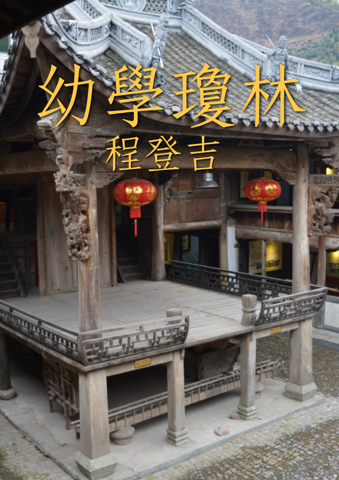
Background:
《Youxue Qionglin》 is a traditional primer organized by category, compiling literary allusions and common terminology. It is generally attributed to Cheng Dengji of the Ming Dynasty, with later expansions by Zou Shengmai and others during the Qing Dynasty. As the volume counts, entries, and attributions vary across different editions, readers should refer to the table of contents of their specific physical copy.
Synopsis:
The book covers a vast range of topics, from astronomy, geography, and seasonal systems to family titles, marriage, food, crafts, and human affairs. It uses rhyming antithetical couplets to link terms, allusions, and knowledge. It functions more as a memorizable mini-encyclopedia than a continuous narrative.
Literary Features:
The parallel prose style facilitates memorization but compresses vast historical allusions into single sentences. Modern annotations must expand on figures and events, distinguish ancient systems, and point out outdated or hierarchical concepts rather than providing a literal word-for-word translation.
No media adaptations are currently recorded.
Major Editions:
This version uses "Youxue Qionglin" as the standard title, with authors/editors typically listed as "Original Compilation by Cheng Dengji; Expanded by Zou Shengmai." The content covers categories such as Astronomy, Geography, Seasons, The Imperial Court, Civil Officials, Military Officers, Ancestors and Descendants, Brothers, and Husbands and Wives. Common alternative titles for search include: Youxue Xuzhi, Chengyu Kao, and Youxue Qionglin.
Reading Suggestions:
The focus of this guide is on the full text and modern annotations. When reading this primer, one should distinguish between the original text, historical commentaries, modern translations, and abridged textbooks. For citations, refer back to the complete text and specific chapters.
The work underwent multiple revisions; the original compilation by Cheng Dengji and subsequent expansions by Zou Shengmai formed the version known today. It should not be viewed as the work of a single person from a single period. it demonstrates how traditional basic education organized world knowledge and serves as a tool for tracing the origins of Chinese idioms (Chengyu).
Miva: the next reading experience beyond audiobooks
Listen like an audiobook, then ask anything, anytime.
Start Miva's narrationMiva does not just narrate. It keeps explaining based on what you ask.