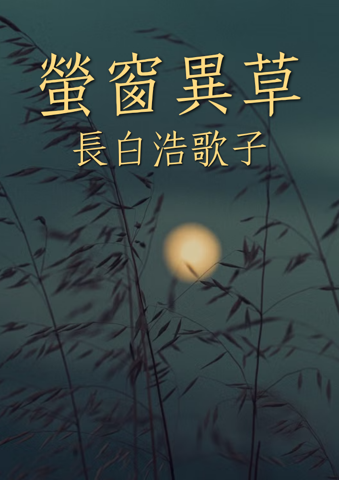
Ying Chuang Yi Cao (Uncommon Grass by the Glowworm Window)
by Changbai Haogezi
Reader's Guide
Background: "Ying Chuang Yi Cao" is a collection of Qing Dynasty Zhiguai (records of the strange) and Chuanqi (legendary) novellas. The complete work consists of three series and twelve volumes, totaling 138 stories. Focusing on ghosts, foxes, foreign lands, romance, gratitude, and karma, it is grand in scale and deliberately continues the reading tradition of Qing Dynasty classical Chinese strange tales. While it shares resources of ghost/fox lore and legends with the well-known "Liaozhai Zhiyi," it possesses its own editorial purpose and narrative rhythm. Its independent value is best understood when placed back into the contemporary culture of woodblock printing, manuscript circulation, and storytelling.
Synopsis: This book is not a single linear novel but is composed of independent stories or entries. Readers will encounter interactions between humans and ghosts, mysterious cases, dreams, romances, acts of gratitude, satire, anecdotes, and local observations. Different chapters use the supernatural to test characters' desires, integrity, and judgment. The short-story format is suitable for casual reading, though the prefaces, postscripts, volume orders, and titles provide essential clues for understanding the work as a whole.
Literary Features: Most chapters feature complete Chuanqi structures, emphasizing plot twists, character fates, and the creation of otherworldly atmospheres; some titles and scenes preserve regional imaginings. Omissions, allusions, and discussions in classical Chinese may pose a reading barrier, but they also allow narratives to achieve complex turns within a very short space. It is recommended to notice how sources are cited at the beginning, when the supernatural enters daily life, and whether the ending affirms, doubts, or satirizes the events.
Film and Television Adaptations
No adapted works are currently recorded.
Versions and Translations
Main Versions: This batch utilizes searchable texts from Chinese Wikisource, cross-referenced with the Chinese Philosophical Book Digitization Project, library scans, or other catalogs. Circulating editions may use titles such as "Ying Chuang Yi Cao" in simplified Chinese. Ancient texts often feature character variations, volume reordering, and modern punctuation; cross-referencing multiple titles is advised during searches. Beginners may start with specific story titles before returning to the prefaces and table of contents to understand the editorial structure. Research citations should verify the original facsimile editions and page numbers.
Reading Tips: This type of collection is best approached through titles, volumes, or motifs of interest before reviewing the prefaces and overall arrangement. When reading, distinguish between the levels of the narrator's firsthand experience, retelling, rumors, and commentary, and observe how supernatural events affect families, local society, officialdom, and ethical judgments. Attitudes toward similar motifs may vary across chapters; the entire book should not be summarized by a single story. Comparing the openings, witness identities, and concluding remarks of several chapters usually reveals the author's or editor's criteria for material selection. For research, one should check textual differences between woodblock prints, manuscripts, and modern punctuated editions rather than relying on online summaries.
Author and Work
Cultural Significance: "Ying Chuang Yi Cao" preserves the diverse themes and voices that the Zhiguai Chuanqi genre can accommodate. It deserves to be read alongside "Liaozhai Zhiyi" but should not be dismissed as merely "another Liaozhai": the era of completion, editorial methods, narrative voices, and social observations differ. Readers can track sources of rumors, narrator attitudes, the plight of women and the marginalized, officialdom vs. local society, and how judgments are rendered after the initial wonder. These clues illustrate that classical strange tales are both entertainment and materials for observing how knowledge, emotion, and order are narrated.
Relationship Between Author and Work: The author signed as "Changbai Haogezi." There are different theories regarding the true identity, and no definitive conclusion has been reached; records should retain the pseudonym without treating speculation as fact. This profile places the author's biography in a separate column, and the introduction only retains information that explains the relationship to the work's formation and reading methodology, adopting a conservative stance on anonymity, pseudonyms, or attribution disputes. When reading such ancient texts, one should distinguish between the main text, prefaces, commentaries, and modern editorial information; the same story may have textual variations across different editions.
Publisher
BookAI
Published
2026-10-01
Miva: the next reading experience beyond audiobooks
Listen like an audiobook, then ask anything, anytime.