The Most Profound Work of German Romantic Art Song
24 Songs for Voice and Piano — A Journey With No Return
A Winter Landscape as Mirror of the Human Soul
Composed in 1827, Still Haunting the World Today
The wanderer does not arrive anywhere. That is the point.
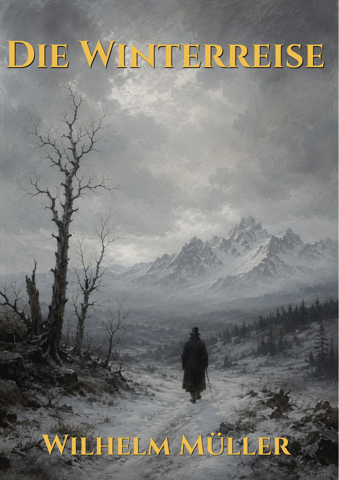
Composed in 1827, Winterreise ("Winter Journey") is a song cycle for voice and piano by Franz Schubert, based on poems by Wilhelm Müller. It stands today as one of the most important and emotionally devastating works in the history of Romantic music — 24 songs that trace not a physical journey, but a descent into loneliness, memory, and the edges of existence.
At the center is an unnamed wanderer who leaves home after a disappointed love and moves through a frozen landscape that never offers shelter. Schubert set the first twelve songs before completing the cycle in full. What he created was not a collection of songs. It was an anatomy of grief: the slow, relentless movement of a mind that has lost its footing in the world.
"Schubert forgoes decorative beauty entirely — what remains is sparse, focused, and psychologically intense. The piano does not accompany the voice. It shapes the very air the wanderer breathes."
The Landscape as Inner World
In Winterreise, snow, ice, darkness, and emptiness are never merely weather. They are the condition of the wanderer's soul made visible. Many songs reveal a profound alienation — between the self and others, between memory and the present moment, between the desire to live and the pull toward disappearance.
Schubert's musical language reflects this with unsparing precision: pounding rhythms, frozen harmonies, and monotonous motion replace the ornamental warmth of earlier Romantic song. The result is something closer to psychological portraiture than performance.
Among the Cycle's Best-Known Songs
The final song deserves its reputation. The wanderer encounters an old hurdy-gurdy player at the edge of the village — alone, barefoot, his instrument turning endlessly, no one listening. The figure has been interpreted as a symbol of isolation, of death, of the fate of the artist. Schubert leaves the question open. The cycle simply stops.
"Winter Journey" is a work you experience rather than merely hear. It does not console. It accompanies — and that, in the end, is more than enough.
Miva: the next reading experience beyond audiobooks
Listen like an audiobook, then ask anything, anytime.
Start Miva's narrationMiva does not just narrate. It keeps explaining based on what you ask.