Background:
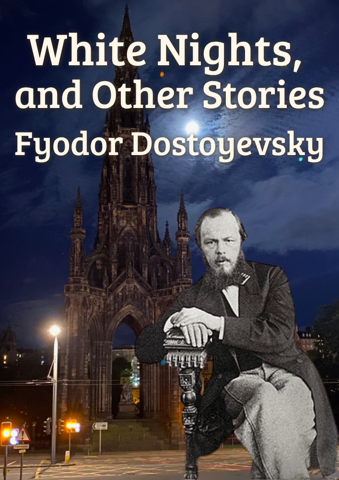
This 1918 English collection, translated by Constance Garnett, gathers works from different moments of Dostoyevsky's career rather than presenting one novel. Its title story dates from 1848, while Notes from Underground and the other narratives bring distinct narrators, settings, and publication histories into one editorial volume.
What kind of book is it?
White Nights follows a solitary dreamer through a brief sequence of meetings in Saint Petersburg, but the collected book continues far beyond that story. Product description must therefore represent the anthology honestly and not promise only the increasingly popular title novella.
Literary style:
Across the volume, confessional narration, social embarrassment, repetition, unstable self-presentation, and abrupt tonal changes test how speech can seek intimacy while defending isolation. The contrasts between stories are part of the edition's value.
Director: Luchino Visconti
Production country: Italy / France
Cast: Marcello Mastroianni, Maria Schell, Jean Marais
Why it matters: A useful, identifiable screen version for comparison.
Difference from the book: moves the story to an artificial Italian cityscape and transforms its narrator and meetings through neorealist melodrama.
Main editions and translations:
the selected digital edition explicitly credits Constance Garnett and supplies a collection. Readers seeking White Nights alone should use a separately identified extraction; this edition preserves every listed work and Garnett's period English, which differs from contemporary translations.
Reading recommendation:
This is a Constance Garnett collection, not a standalone edition of White Nights. Check the contents before choosing it. Readers wanting only the title story may prefer a clearly identified modern translation, but quotations must still name the translator.
Cultural significance:
The social-media revival of White Nights often isolates romantic lines from their narrative setting. This complete volume offers a corrective context by placing the dreamer's longing beside other Dostoyevskian studies of pride, dependency, humiliation, and the stories people tell about themselves.
Place in the author's writing:
Because this volume gathers works from different periods, it reveals more than the title novella alone. The sentimental urban dreamer, the socially embarrassed narrators, and the underground monologue show Dostoyevsky repeatedly revising how isolation speaks. The collection connects his early Petersburg tales to the confrontational voices of his mature novels.
Miva: the next reading experience beyond audiobooks
Listen like an audiobook, then ask anything, anytime.
Start Miva's narrationMiva does not just narrate. It keeps explaining based on what you ask.