The Sailor Who Lived Among the So-Called Cannibals
Herman Melville's First Book
Travel Memory, Adventure, and Imaginative Reconstruction
The Bestseller That Made Melville Famous Overnight
Before the celebrated masterpieces came Typee: a first book in which Herman Melville's defining concerns were already taking shape.
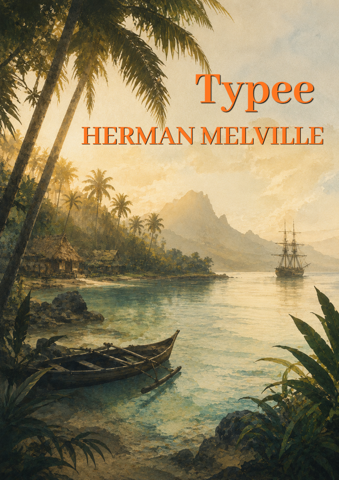
Typee: A Peep at Polynesian Life is American writer Herman Melville's first book, published in 1846, when Melville was 26 years old. Considered a classic in travel and adventure literature, the narrative is based on Melville's experiences on the island Nuku Hiva in the South Pacific Marquesas Islands in 1842, supplemented with imaginative reconstruction and research from other books. The title comes from the valley of Taipivai, once known as Taipi. Typee was Melville's most popular work during his lifetime; it made him notorious as the "man who lived among the cannibals".
Typee was published first in London by John Murray on February 26, 1846, and then in New York by Wiley and Putnam on March 17, 1846. It was Melville's first book, and made him one of the best-known American authors overnight.
Melville reshapes his brief stay in the Marquesas into a narrative poised between eyewitness travel, adventure, and invention. The valley first appears as a feared territory associated with cannibalism, but daily life among its inhabitants steadily unsettles the prejudices carried there by the Western narrator.
That reversal gives the book its lasting critical force. Its descriptions can reproduce nineteenth-century exoticism, yet its attacks on missionary violence and colonial assumptions challenge the claim that European civilisation automatically brings moral progress. The resulting tension keeps Typee open to debate as well as adventure.
For Melville's first readers, the uncertainty between fact and invention was part of the attraction. The narrator presents the authority of personal experience, yet the polished episodes and researched additions continually remind modern readers that travel writing also constructs the people and places it claims merely to describe.
“man who lived among the cannibals”
Why Typee Still Matters
Read today, Typee offers more than the curiosity of a famous writer's beginning. It preserves the risks, experiments, and unresolved tensions of a literary voice before later success made that voice familiar.
Return to the beginning, and discover how Typee first opened the path ahead.
Miva: the next reading experience beyond audiobooks
Listen like an audiobook, then ask anything, anytime.
Start Miva's narrationMiva does not just narrate. It keeps explaining based on what you ask.