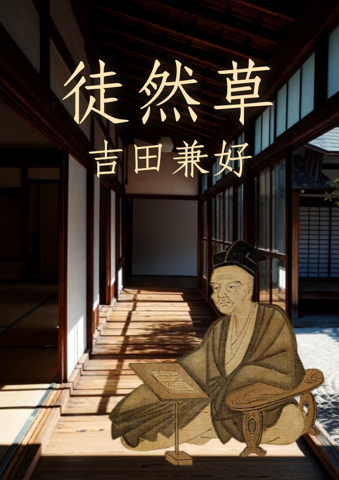
Introduction
Background: Tsurezuregusa was composed during Japan's medieval period, a time when society transitioned from aristocratic culture to a warrior-led order, and the Buddhist concept of impermanence (mujo) deeply influenced the sensibilities of intellectuals. From the perspective of a recluse, Yoshida Kenkō observes etiquette, taste, human nature, and the passage of time. The work lacks a grand narrative but preserves a detailed observation of daily life, aesthetics, and the finiteness of existence following an era of upheaval. This background is not merely a chronological footnote; it determines how the work understands power, desire, and individual choice. By grasping this historical context, readers can see the deeper cultural anxieties and value conflicts behind the anecdotes.
Summary: Tsurezuregusa consists of over 200 short sections containing character anecdotes, observations of life, aesthetic critiques, Buddhist reflections, and sharp arguments. Kenkō at times discusses housing, objects, and nature; at others, he critiques worldly vanity or records the behavior of absurd figures. Reading this book is like following the author's shifting thoughts: though the fragments seem scattered, they collectively point toward how to remain sober, temperate, and sensitive in an impermanent world. One can view the plots as a series of tests: how characters face misjudgment, temptation, loss, or desire is often more important than the events themselves. The progression of these stories allows the classic to return to the reader's judgment rather than remaining distant from modern experience.
Literary Features: A representative of Japanese zuihitsu (essay) literature, the prose is flexible, blending casual talk, maxims, memories, and criticism. Its beauty lies not in complete logical arguments but in the resonance between fragments. Kenkō excels at finding the scale of life in small things, such as the flaws in an object, the boundaries of social interaction, or the fleeting moments of prosperity and decline. The work presents a restrained yet sharp aesthetic, where impermanence is not a pessimistic slogan but a way of observing the everyday. Its beauty is found not just in plot or language, but in how it transforms thought into tangible scenes and actions. The reversals, contrasts, symbols, and shifts in tone provide layers that warrant re-reading, moving beyond simple entertainment.
Encyclopedia
Life of the Author: Yoshida Kenkō was a poet, official, and recluse during the late Kamakura to Northern and Southern Courts period. He was familiar with court culture before taking tonsure. This position—being familiar with worldly etiquette while maintaining distance—allowed him to comment on human affairs with a bystander's eye. While biographical details are sparse, Tsurezuregusa established him as one of the most important essayists in Japanese history. Understanding his life helps identify recurring themes: power, faith, identity, displacement, frustration, or the obsession with beauty. These life experiences are not the sole interpretation of the work but provide a stable entry point for the reader.
Relationship Between Author and Work: Tsurezuregusa is almost an extension of Kenkō’s spiritual posture. He does not fully flee the secular world but observes it repeatedly from its edges. He appreciates beauty while warning against attachment; he understands etiquette while mocking affectation. The relationship between the work and the author is like a notebook of thoughts, showing how a reclusive literatus transforms daily experience into aesthetic judgment and spiritual practice. Readers can observe how his intellectual concerns are transformed into characters, plots, and narrative rhythm. The work does not simply state his stance but lets these positions be tested within the stories, which is why the classic can engage in cross-generational dialogue.
Reflections on Classics: In the last decade, this can be read alongside the film Perfect Days (2023). The film depicts a repetitive, simple, and focused life in a modern city, emphasizing light, silence, and small sensations; Tsurezuregusa preserves a similar daily sensitivity in the form of a medieval essay. The difference is that the film leans toward modern individual life choices, while Kenkō uses Buddhist impermanence to remind people not to be led by fame, wealth, or form. Such a comparison does not treat the visual adaptation as a substitute for the original, but shows how the same set of questions is reorganized across different media. Films often amplify visuals and contemporary issues, while the original retains finer layers of language and logic."
Miva: the next reading experience beyond audiobooks
Listen like an audiobook, then ask anything, anytime.
Start Miva's narrationMiva does not just narrate. It keeps explaining based on what you ask.