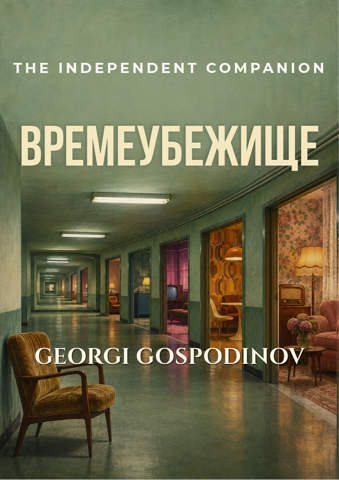
Gaustin creates a clinic where rooms recreate past decades for people with dementia; soon, however, all of Europe begins to seek refuge from the present.
This independent guide outlines the novel’s five parts, the expansion of the clinic, the referendums on the past, and the narrator’s unsettled sense of time, without revealing the final return of history.
Winner of the 2023 International Booker Prize and the 2021 Premio Strega Europeo.
Personal memory can console, but collective nostalgia easily turns into a political technology. The novel connects the care of the sick with the question of who chooses a nation’s past.
Smells, furniture, and music soothe the individual, but they can also be packaged and sold as ready-made nostalgia.
What helps in the clinic becomes dangerous when the state erases the violence and victims of the chosen “golden” decade.
Their voices gradually overlap; this guide traces the movement between observation, fiction, and memory loss.
For readers who want to follow the short chapters, the European references, and the metafictional structure, without reducing the book to political allegory.
Edition note: This is an independent guide and summary, not the original text. It is most useful alongside the complete work.
Miva: the next reading experience beyond audiobooks
Listen like an audiobook, then ask anything, anytime.
Start Miva's narrationMiva does not just narrate. It keeps explaining based on what you ask.