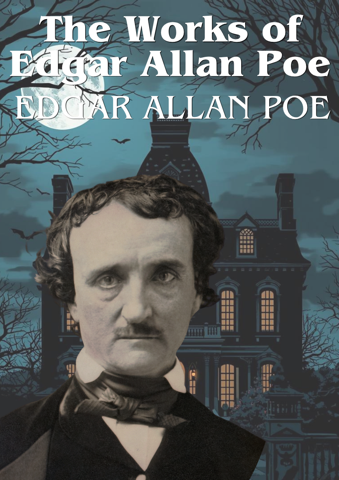
The Father of the Detective Story • The Architect of Modern Horror
The Man Who Elevated the Short Story Into an Art Form
From Sherlock Holmes to the Baltimore Ravens — A Legacy That Reshaped Culture
He invented the detective story. He defined psychological horror. He did it all before the age of forty, in poverty, and largely without recognition. The recognition came later. It has not stopped since.
Edgar Allan Poe did not merely write dark stories. He constructed a philosophy of darkness—and then built an architecture to house it.
Against the sunlit optimism of the Transcendentalists, Poe raised a counter-argument in ink and shadow: that literature's purpose was not to instruct or improve, but to create a unified emotional effect, precise and overwhelming, from the first word to the last. Meaning, he insisted, should move like an undercurrent beneath the surface—never stated, never obvious, always felt. The moment a work explains itself, it ceases to be art.
From this philosophy came a body of work that invented genres, redefined forms, and haunted every writer who came after.
"The Tell-Tale Heart is the best story written by an American."
—Matt Gillick, literary critic
In 1841, Poe published The Murders in the Rue Morgue and invented the modern detective story in a single gesture—introducing the eccentric, ratiocinating C. Auguste Dupin, whose method of analytical reasoning Arthur Conan Doyle would borrow forty years later for a consulting detective in Baker Street. Poe called the form the "tale of ratiocination." The world eventually called it the mystery novel, and built an entire publishing industry on its foundations.
He did the same for horror. The premature burial. The unreliable narrator consumed by guilt. The house that reflects its owner's psychological disintegration. The corpse that will not stay dead. These were not merely stories—they were templates, absorbed so completely into the grammar of horror that we no longer see Poe's fingerprints on them. They have become the genre itself.
He elevated the short story from a form critics dismissed as cheapened and disposable into a precise literary instrument—opening the door for Ray Bradbury, Kurt Vonnegut, and every writer who understood that a perfectly constructed small thing can carry more weight than a sprawling one.
His shadow falls across a century of film adaptations, countless horror aesthetics, and the ongoing DNA of genre fiction. The NFL's Baltimore Ravens took their name from his 1845 poem. Every locked-room mystery, every psychological thriller, every story told by a narrator you cannot quite trust—traces its lineage here.
Poe died in 1849, at forty, under circumstances that remain disputed. He spent most of his life in financial ruin and critical neglect.
He invented three genres, redefined two more, and changed the short story forever. He did it without an audience. The audience eventually found him.
Miva: the next reading experience beyond audiobooks
Listen like an audiobook, then ask anything, anytime.
Start Miva's narrationMiva does not just narrate. It keeps explaining based on what you ask.