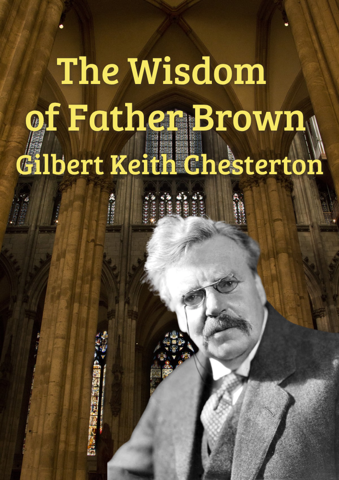
Introduction
Background: The Wisdom of Father Brown followed the success of the previous series and met readers' expectations by continuing to infuse the classical mystery framework with religion, philosophy, and a sense of comedy. The cases in these works are often surrounded by folklore, exoticism, authority figures, or mists of superficial morality, reflecting the early 20th-century public fascination with strange cases and anecdotes. Chesterton deconstructs these spectacles one by one, returning to ordinary yet profound human motivations. This background is not just a chronological note; it determines how the work understands power, desire, and individual choice. If readers grasp this layer of historical context first, they can see the deeper cultural anxieties and value conflicts behind the plot.
Synopsis: In this book, Father Brown traverses different settings, facing theft, murder, scams, and seemingly supernatural mysteries. Others often misjudge due to reputation, class, appearance, or legend, but the priest identifies the true key in a low-profile manner. Each story is like a sophisticated trap: readers are first attracted by peculiar settings, only to find the most reasonable answer at the end has been hidden all along in the most inconspicuous moral details. When reading, one can view the plot as a series of tests: how characters face misjudgment, temptation, loss, or desire is often more important than the events themselves. The progression of the stories ensures that the classics no longer feel distant from modern experience but return to the reader's judgment.
Literary Features: This book showcases Chesterton's mastery of paradoxical reasoning. The language is witty, scenes are vivid, and conclusions often carry an allegorical meaning. Unlike detectives who emphasize forensic technology, Father Brown relies on an understanding of sin, pride, and self-deception. His wisdom is not encyclopedic knowledge, but a judgment of human proportion. Consequently, the work offers both the pleasure of genre fiction and the intellectual resonance of religious essays. Its beauty lies not only in plot or language but in how it transforms ideas into tangible scenes and character actions. The twists, contrasts, symbols, and shifts in tone provide layers for re-reading that go beyond mere genre entertainment.
Encyclopedia
Author's Life: Chesterton was a significant public intellectual in early 20th-century Britain, with a career spanning literature, theology, politics, and criticism. He was famous for his lively paradoxical style, often using seemingly absurd sentences to point out blind spots in common sense. The Father Brown series allowed his ideas to move beyond argumentative essays and enter the wider popular reading market through cases, characters, and twists. Understanding the author's life helps identify recurring themes: power, faith, identity, displacement, frustration, or the pursuit of beauty. These life experiences are not the sole explanation for the work, but they provide a more solid entry point for reading.
Relationship between Author and Work: The Wisdom of Father Brown is essentially a fictionalization of Chesterton's worldview: true understanding requires humility rather than conceit. The author portrays the priest as plain, short, and inconspicuous specifically to contrast with the blindness of worldly authority. The work repeatedly proves that the one who can see through a mystery is often not the proudest rationalist, but the observer willing to admit human fragility and pity sinners. Therefore, while reading this book, one can observe how the author's intellectual concerns are transformed into characters, plots, and narrative rhythms. The work does not simply state the author's position; it allows these positions to be tested within the story, which is why classics can engage in cross-generational dialogue.
Classic Reflections: The revival of classical mystery in the last decade can be seen in Murder on the Orient Express (2017) and Knives Out (2019). These works emphasize closed settings, ensemble suspects, and detective charisma, sharing a generic kinship with Father Brown. However, Chesterton pursues flashy aesthetics and star casts less; he focuses on how sin disguises itself as decency and how wisdom emerges from humility rather than showmanship. Such comparative reading does not treat film adaptations as substitutes for the original work but observes how the same set of questions is reorganized across different media. Films often amplify visuals, pacing, and contemporary issues, while the original retains finer linguistic layers and intellectual logic."
Miva: the next reading experience beyond audiobooks
Listen like an audiobook, then ask anything, anytime.
Start Miva's narrationMiva does not just narrate. It keeps explaining based on what you ask.